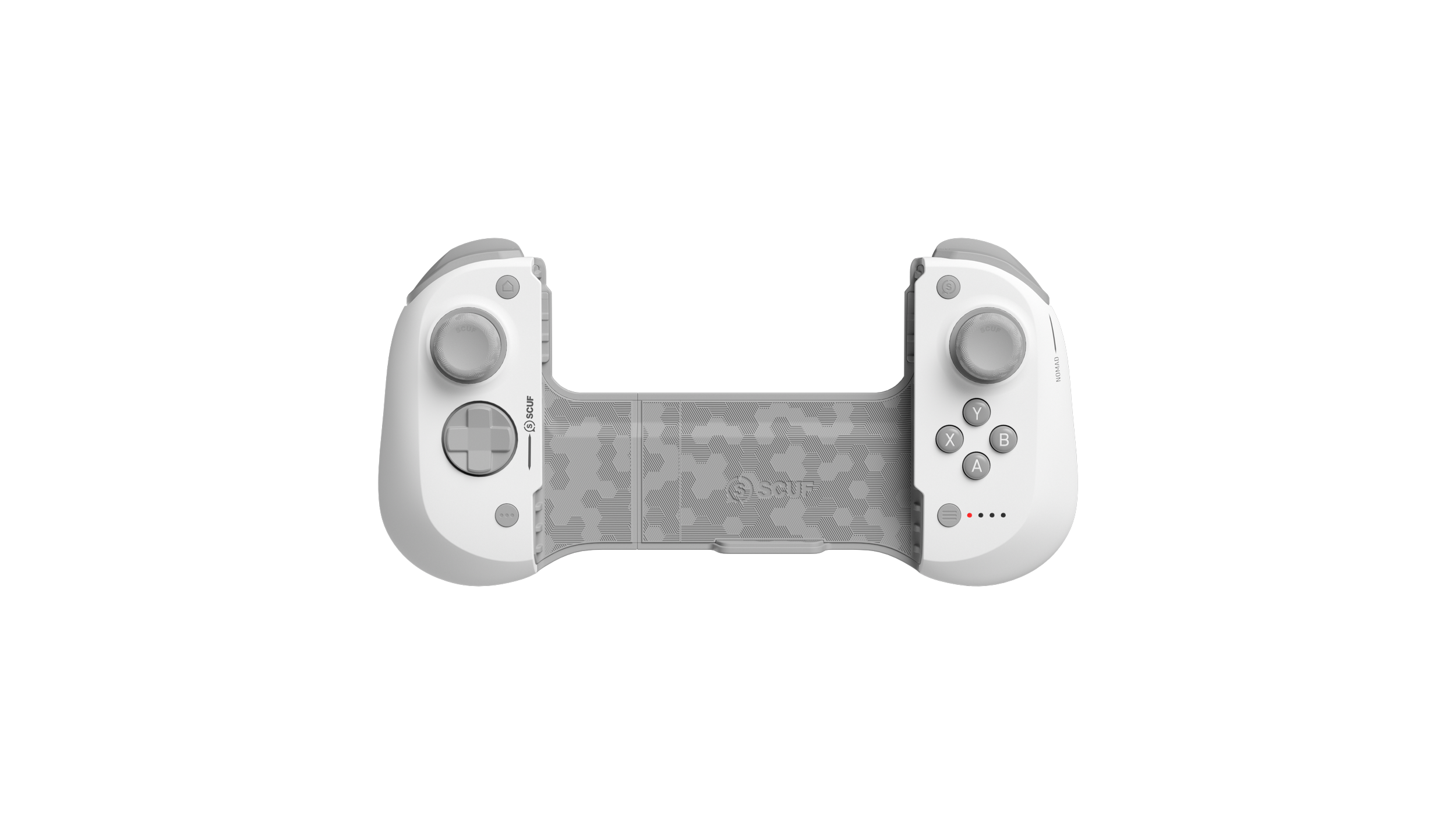
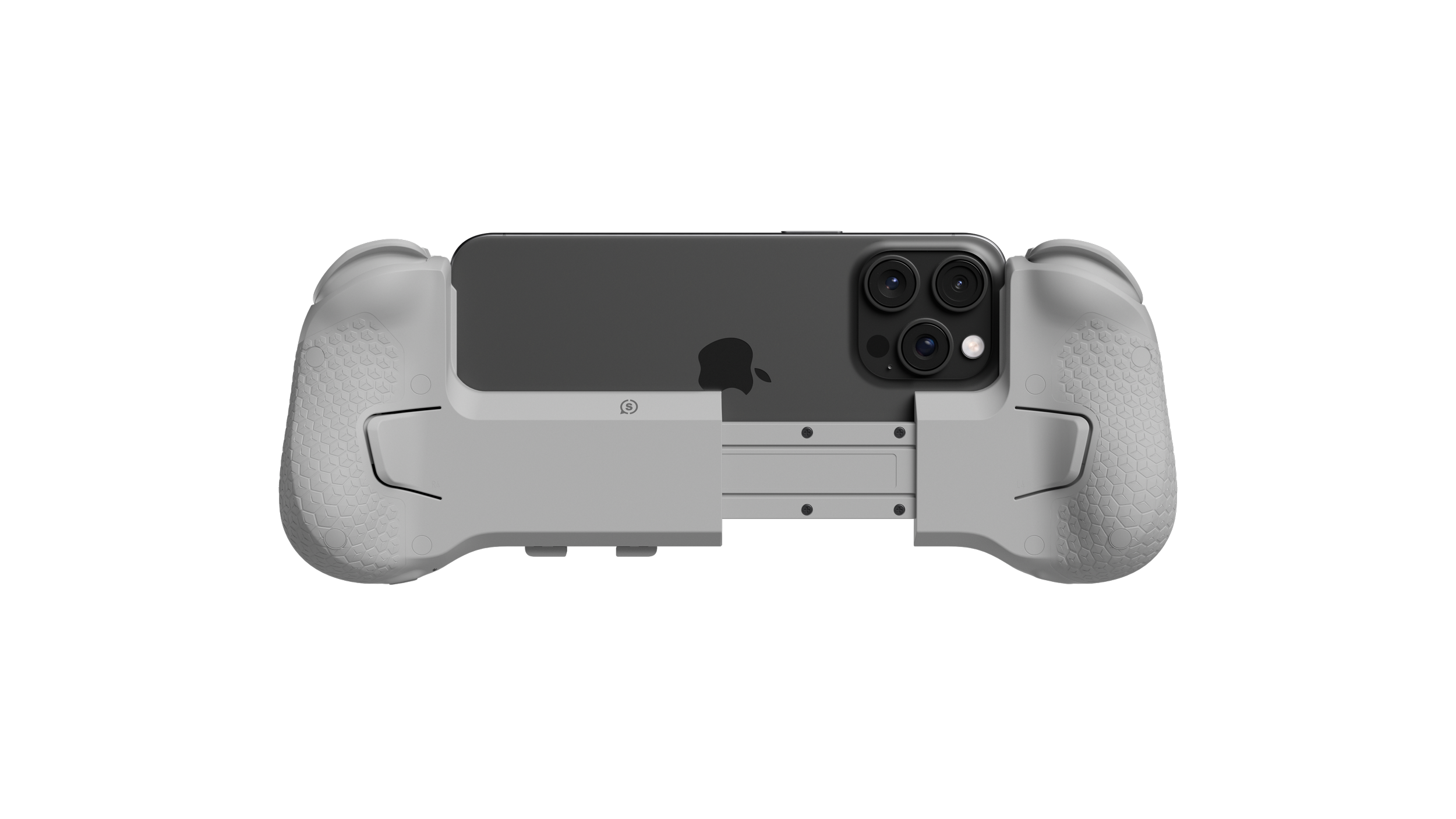
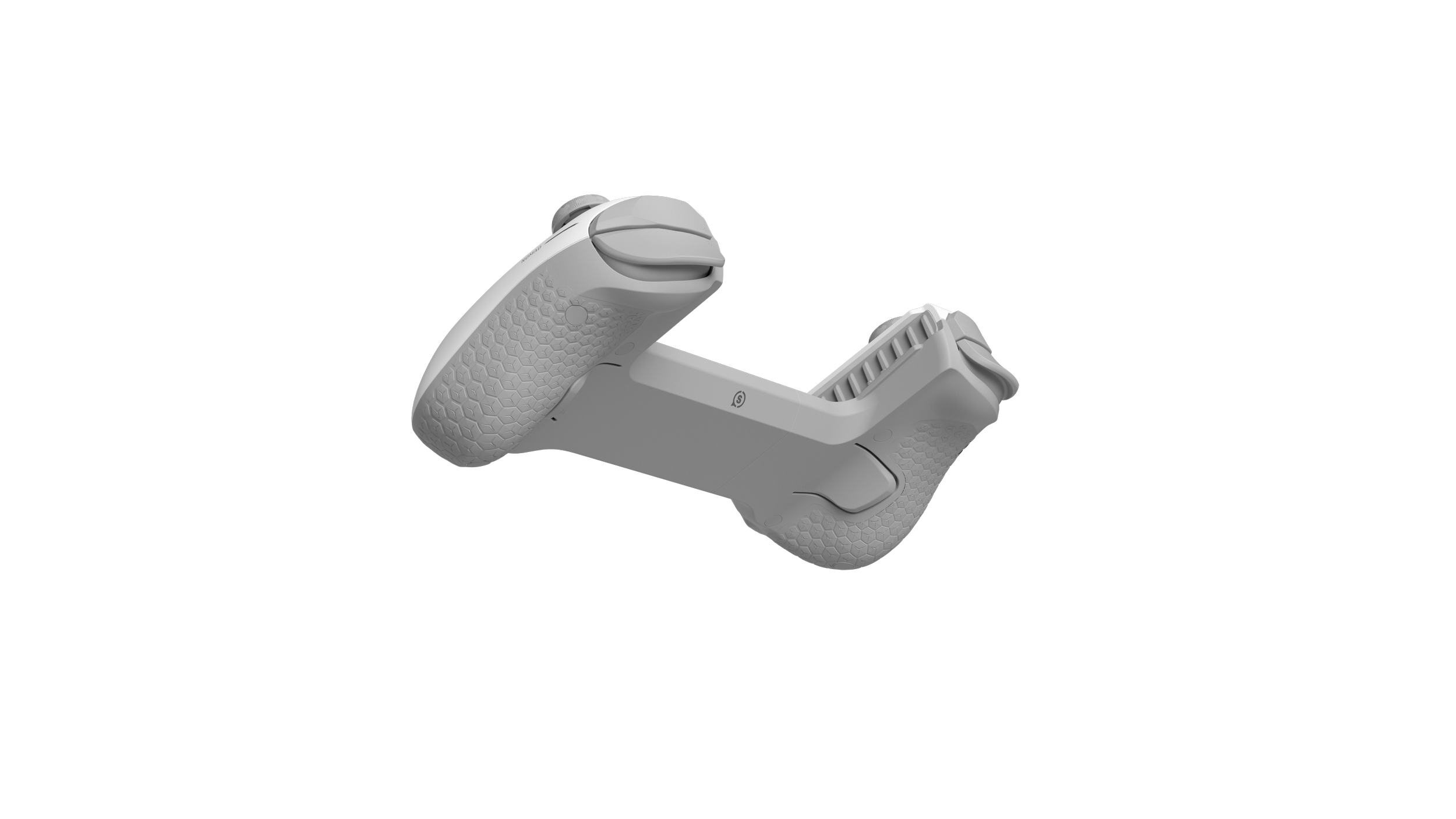
Go wherever, with…
Nomad Mobile Controller
The Problem //
As smartphones reach unprecedented levels of processing power, the demand for high-fidelity mobile gaming has surged, creating a massive market opportunity for dedicated mobile gaming hardware. However, the current retail landscape is saturated with underwhelming solutions.
Existing devices frequently compromise on true portability and suffer from poor physical ergonomics. Users are often left with toy-like inputs that lack precise actuation and satisfying tactile feedback, coupled with inadequate battery life and cheap, unrefined build quality. This leaves a significant gap in the market for a premium, thoughtfully engineered solution.
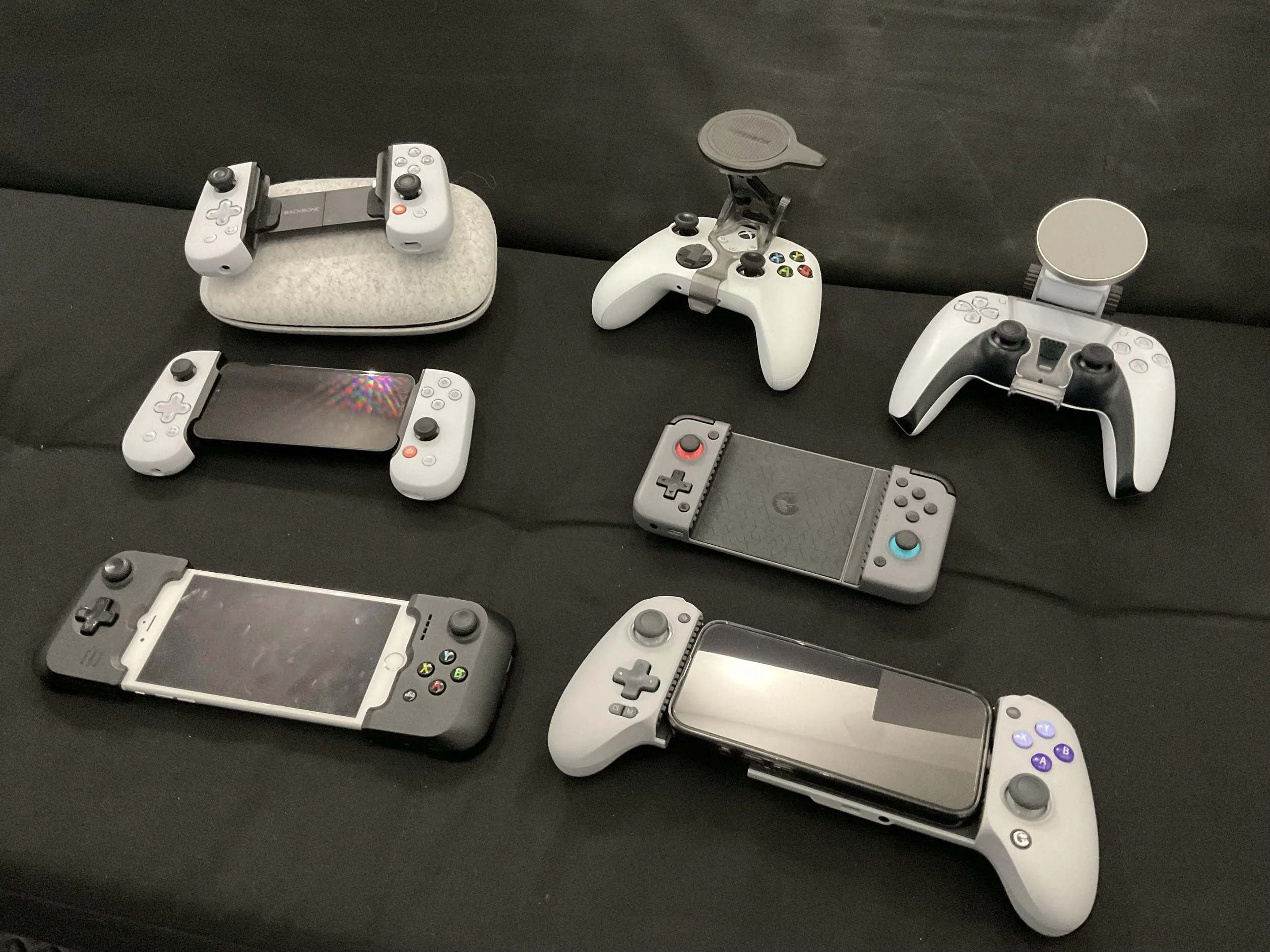
Sketch Phase Feature Development //
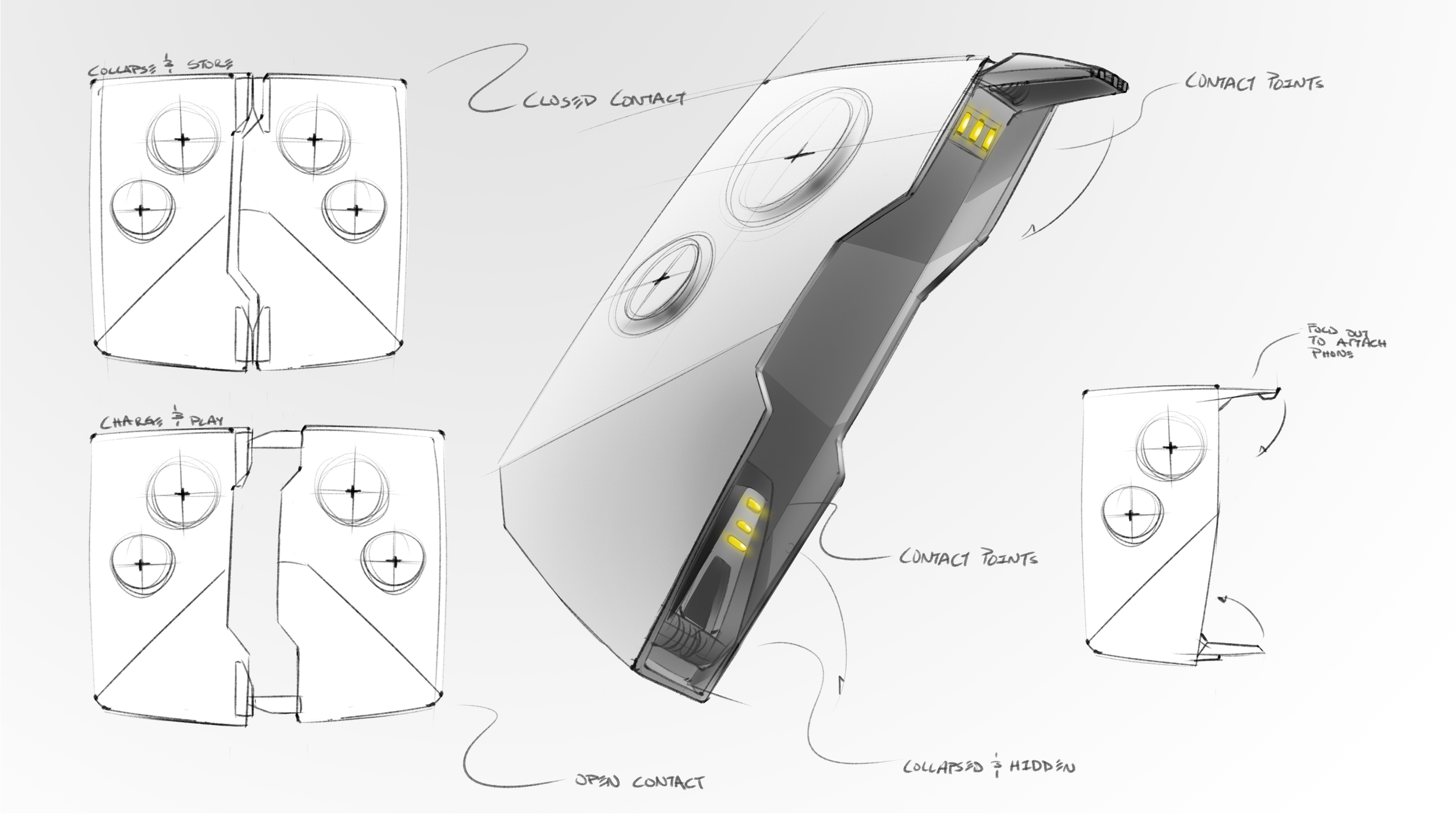
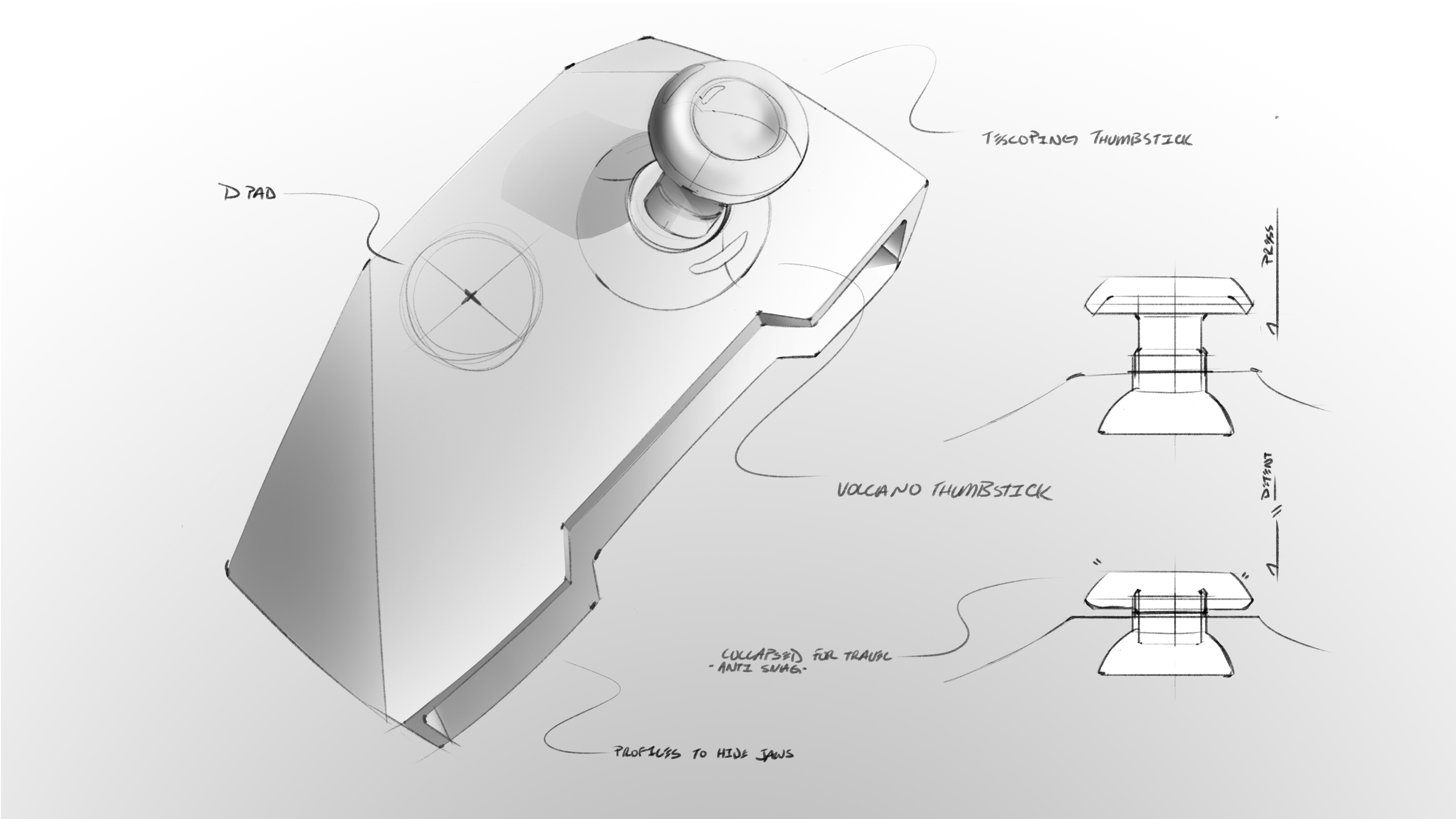
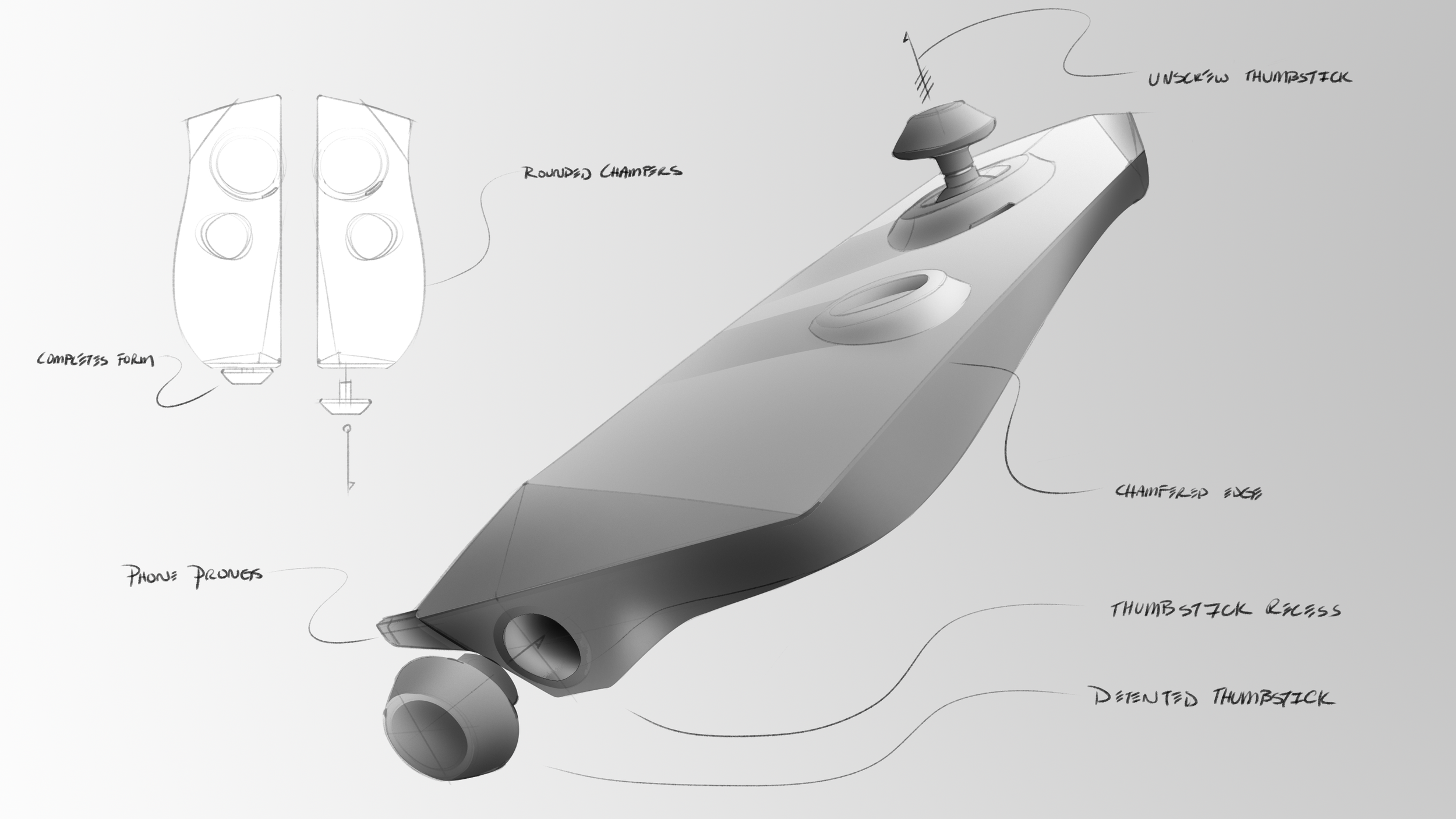
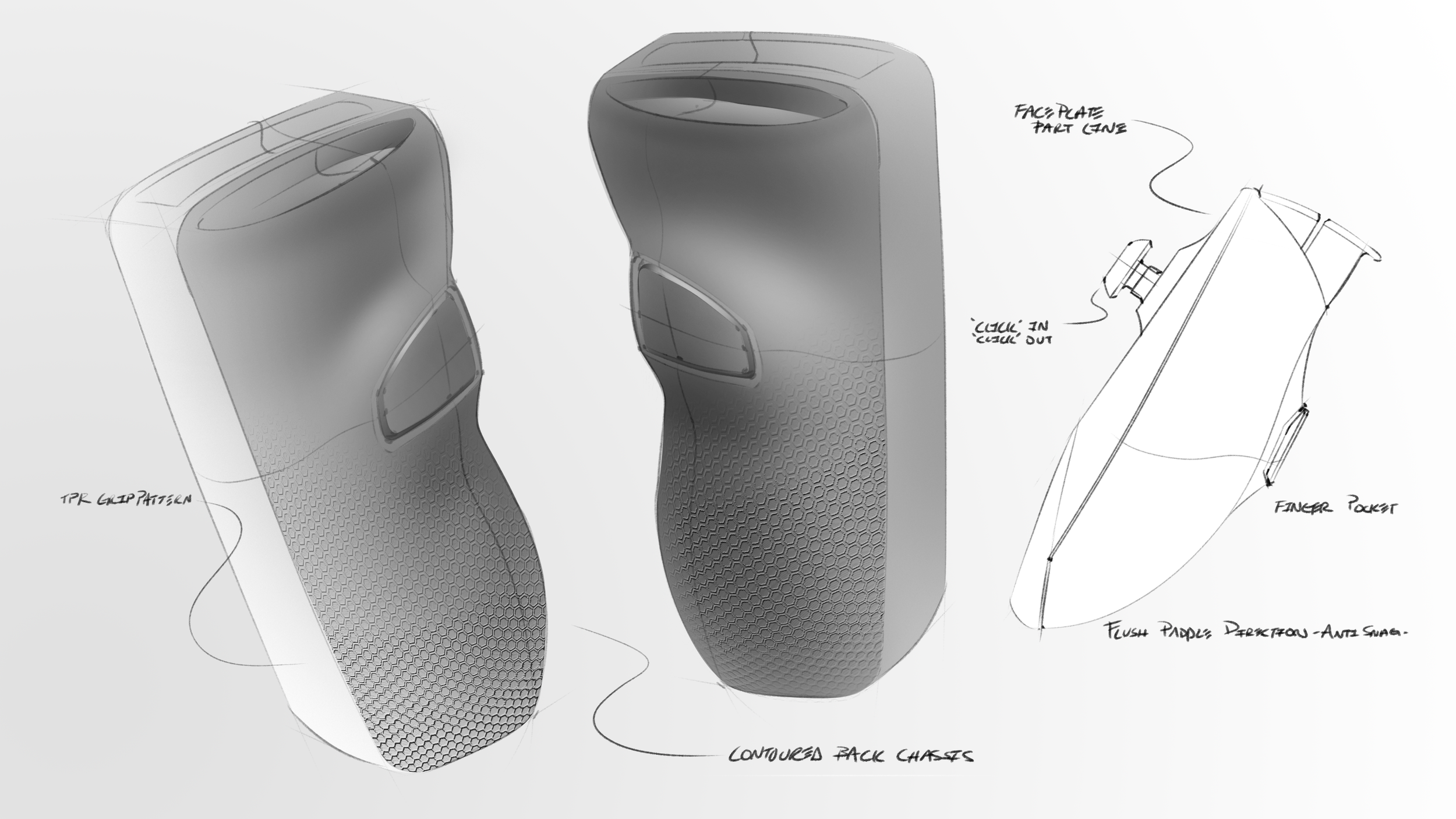
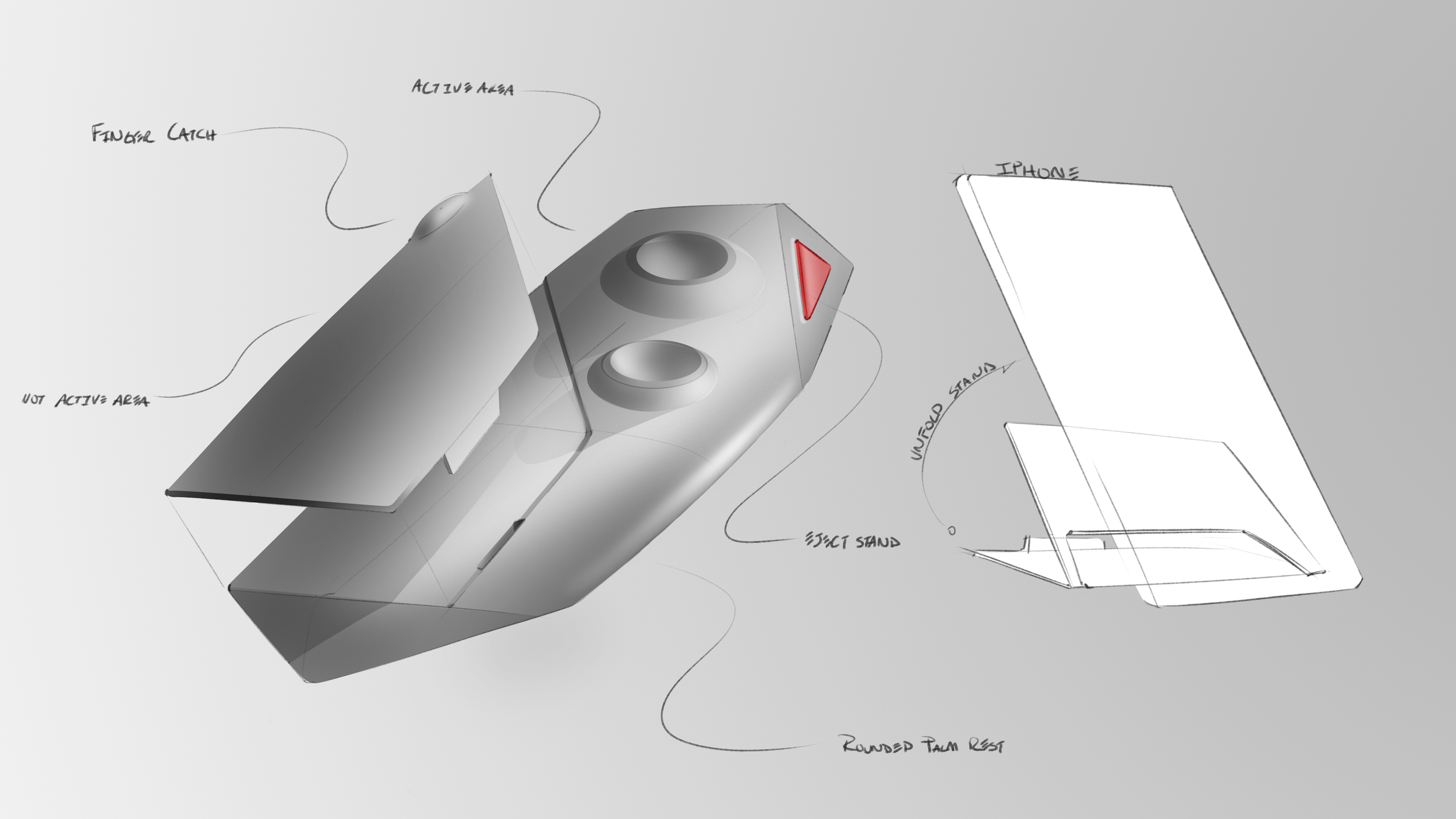
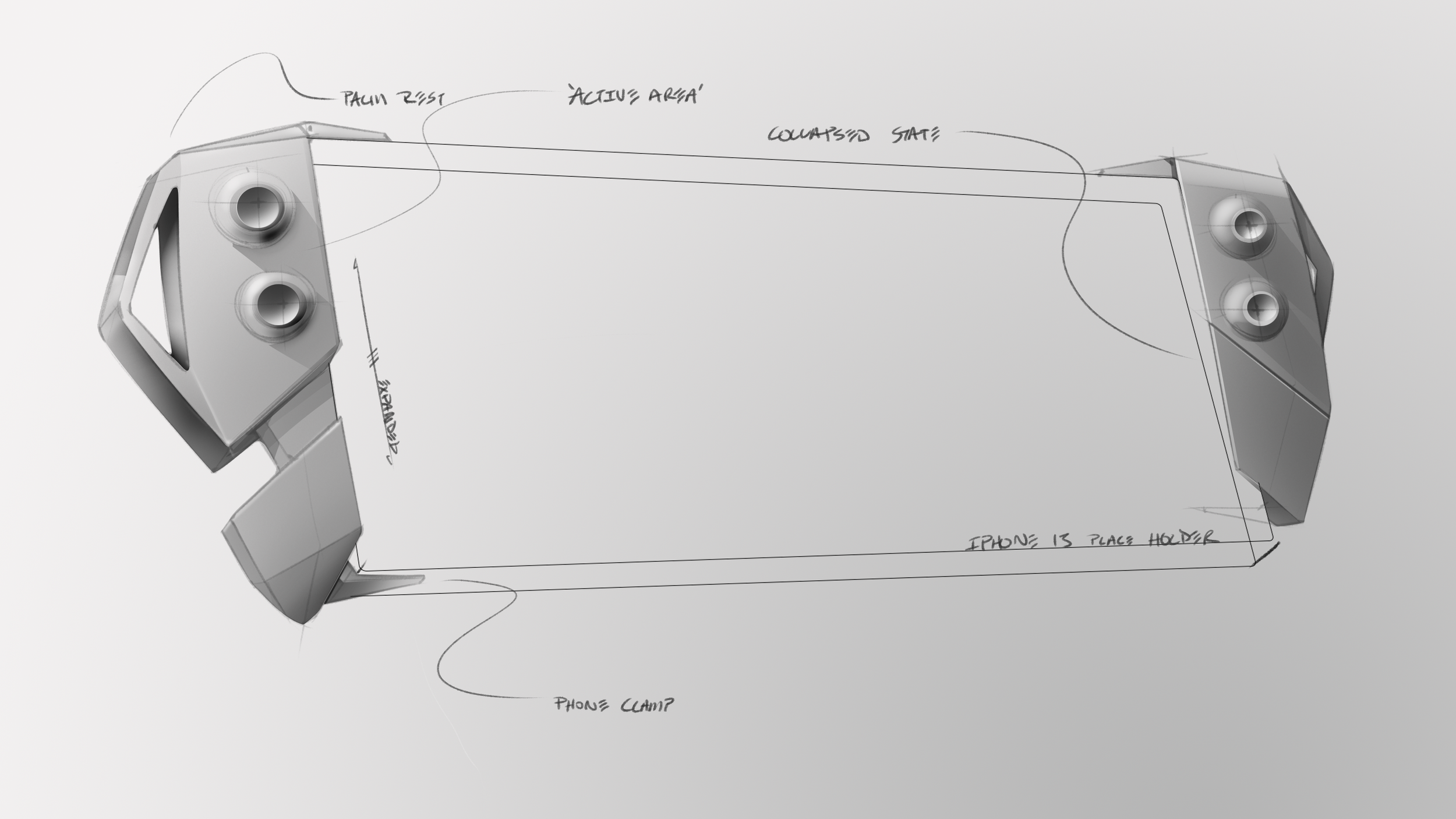
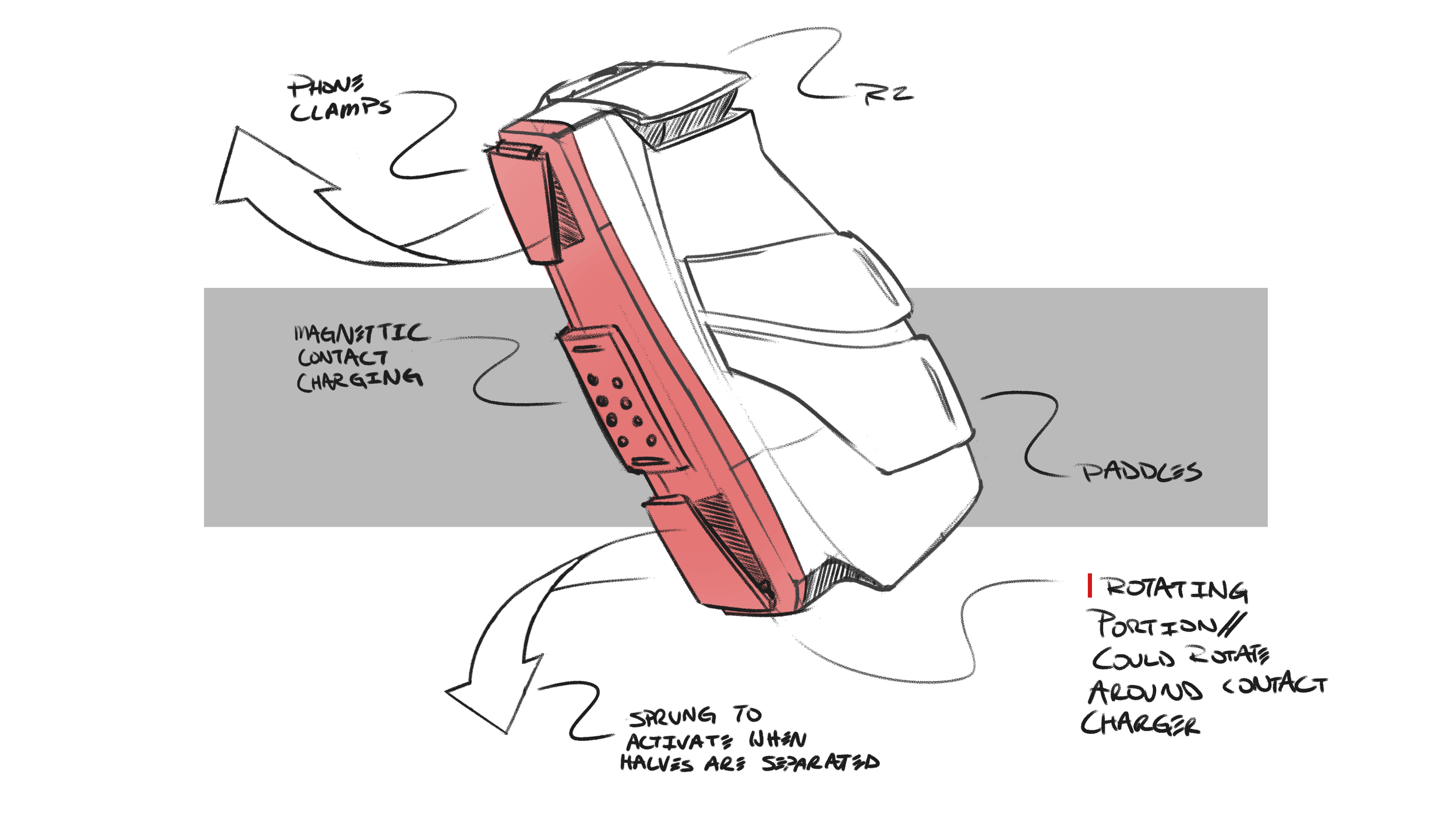
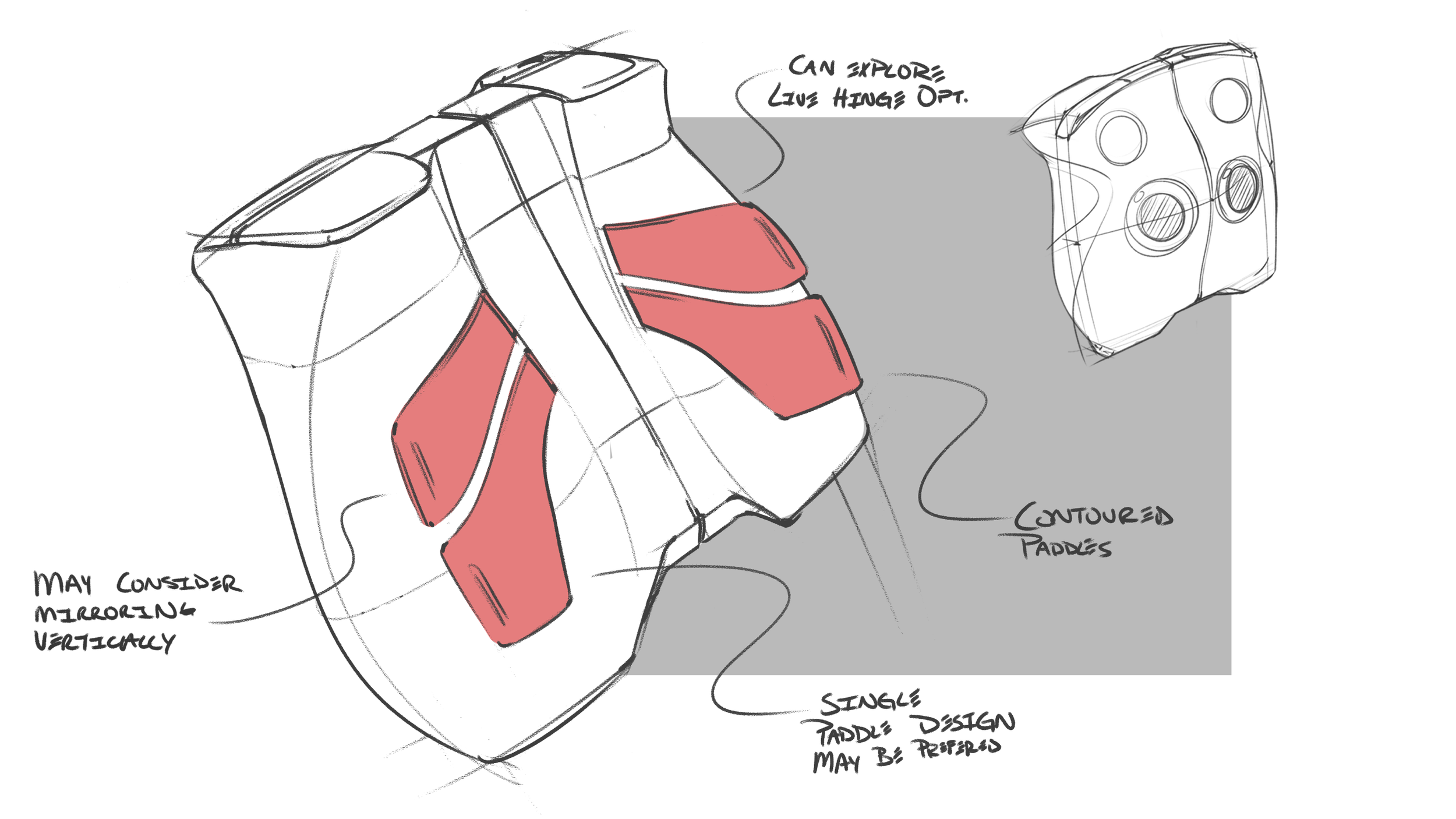
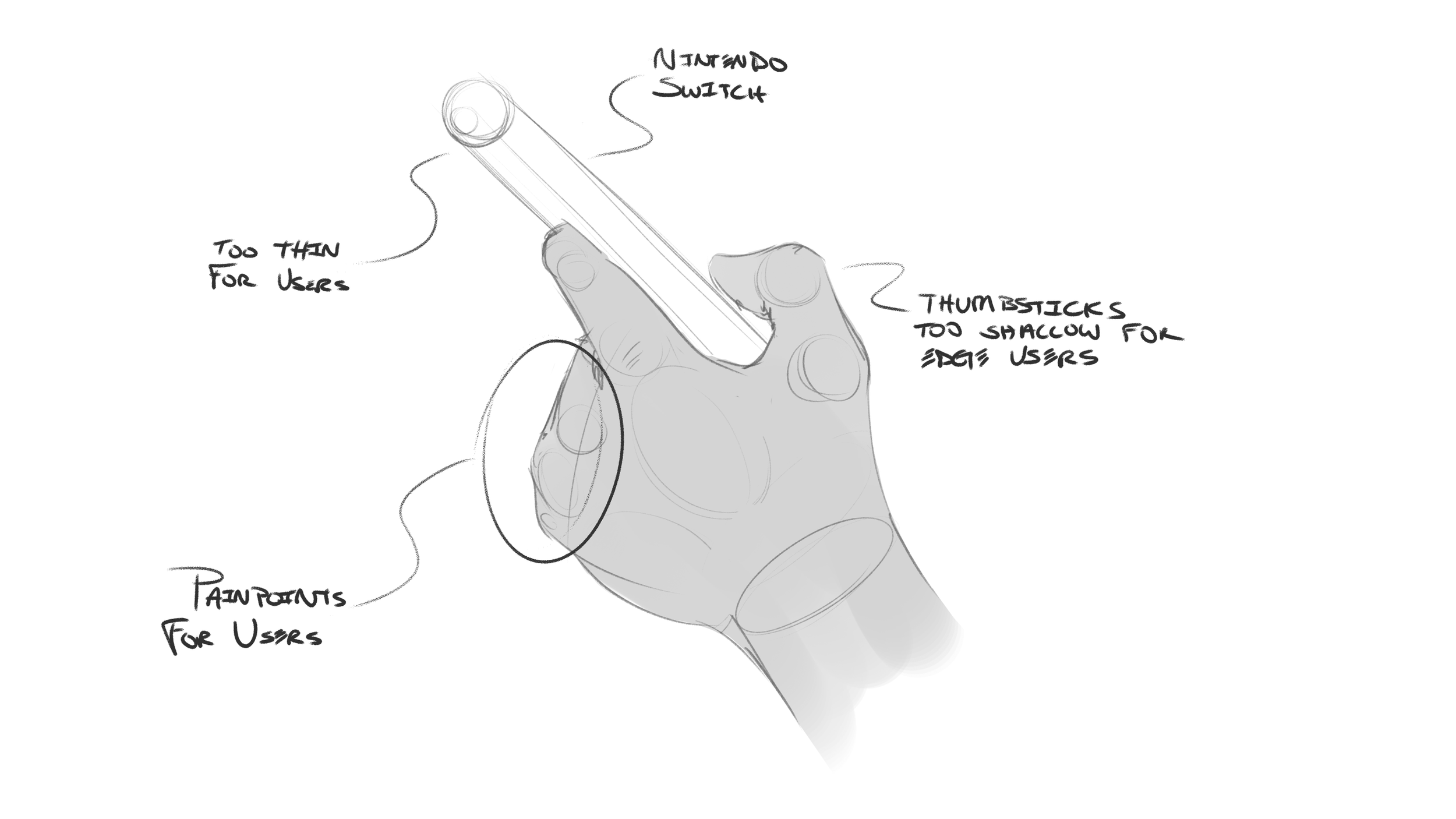
The ideation phase kicked off with unconstrained "blue sky" concept sketching, driven directly by critical insights from our initial market study. Our guiding strategic question was simple: How can we disrupt the market and deliver unmatched value that our competitors are missing?
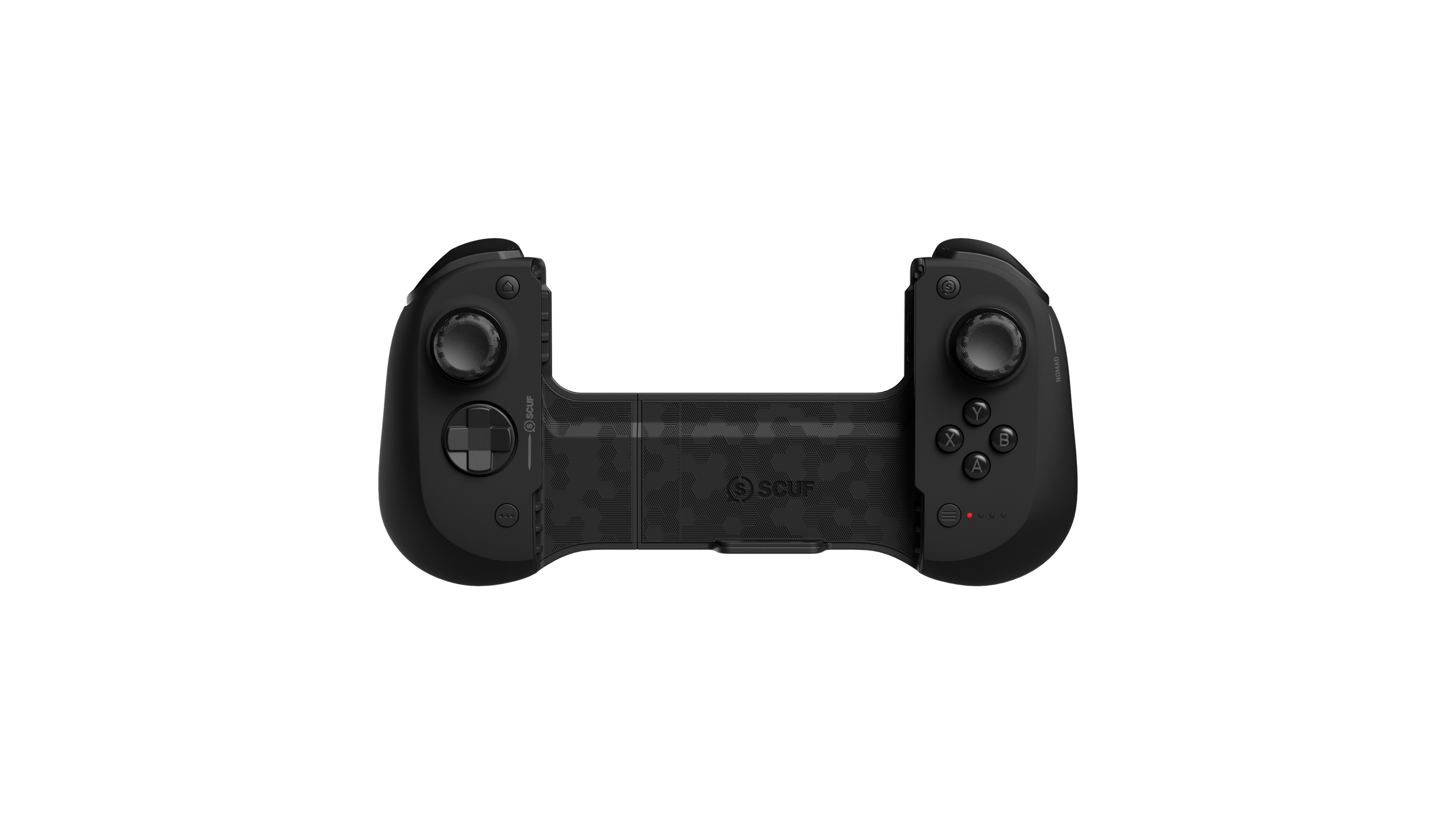
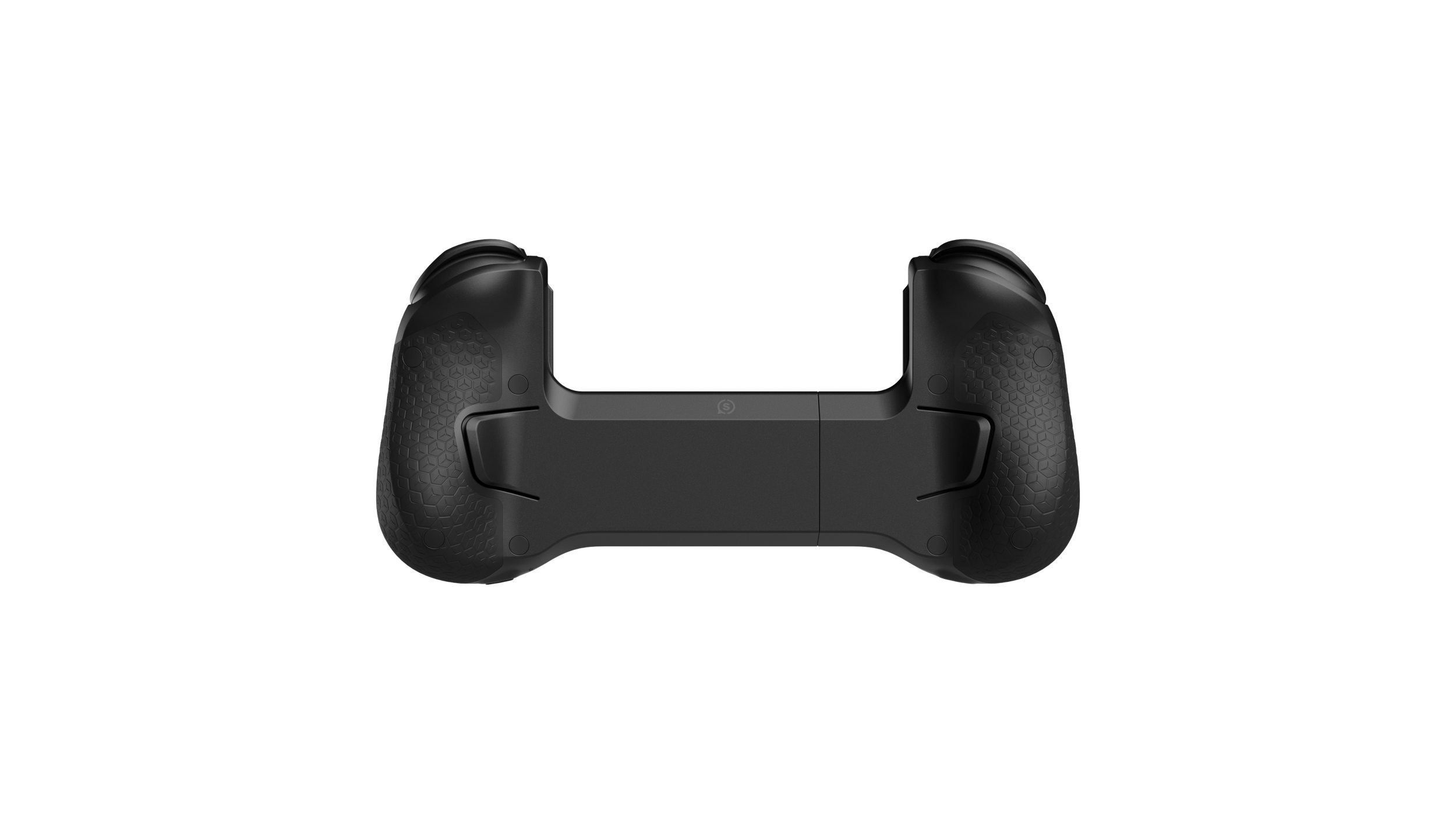
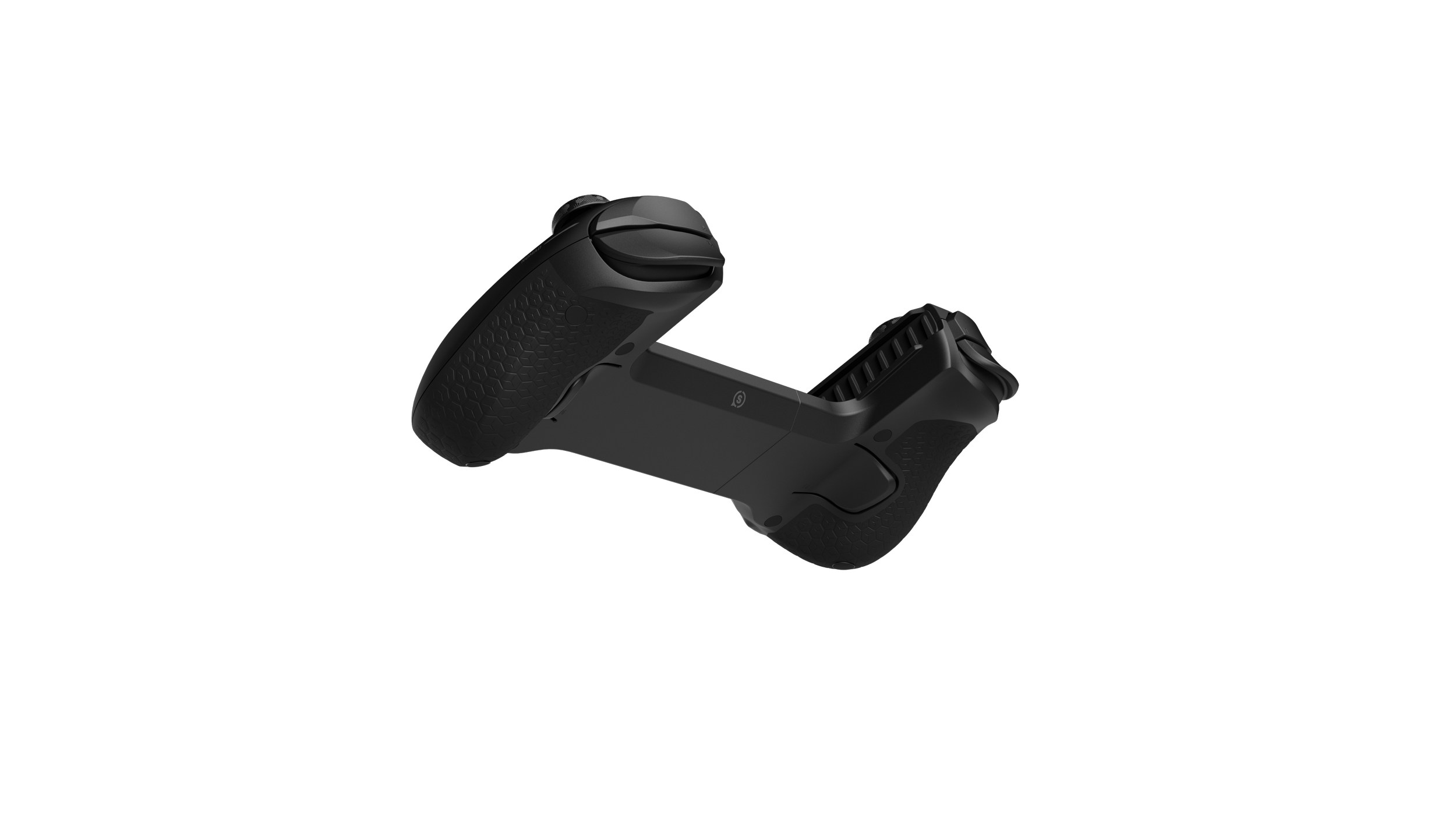
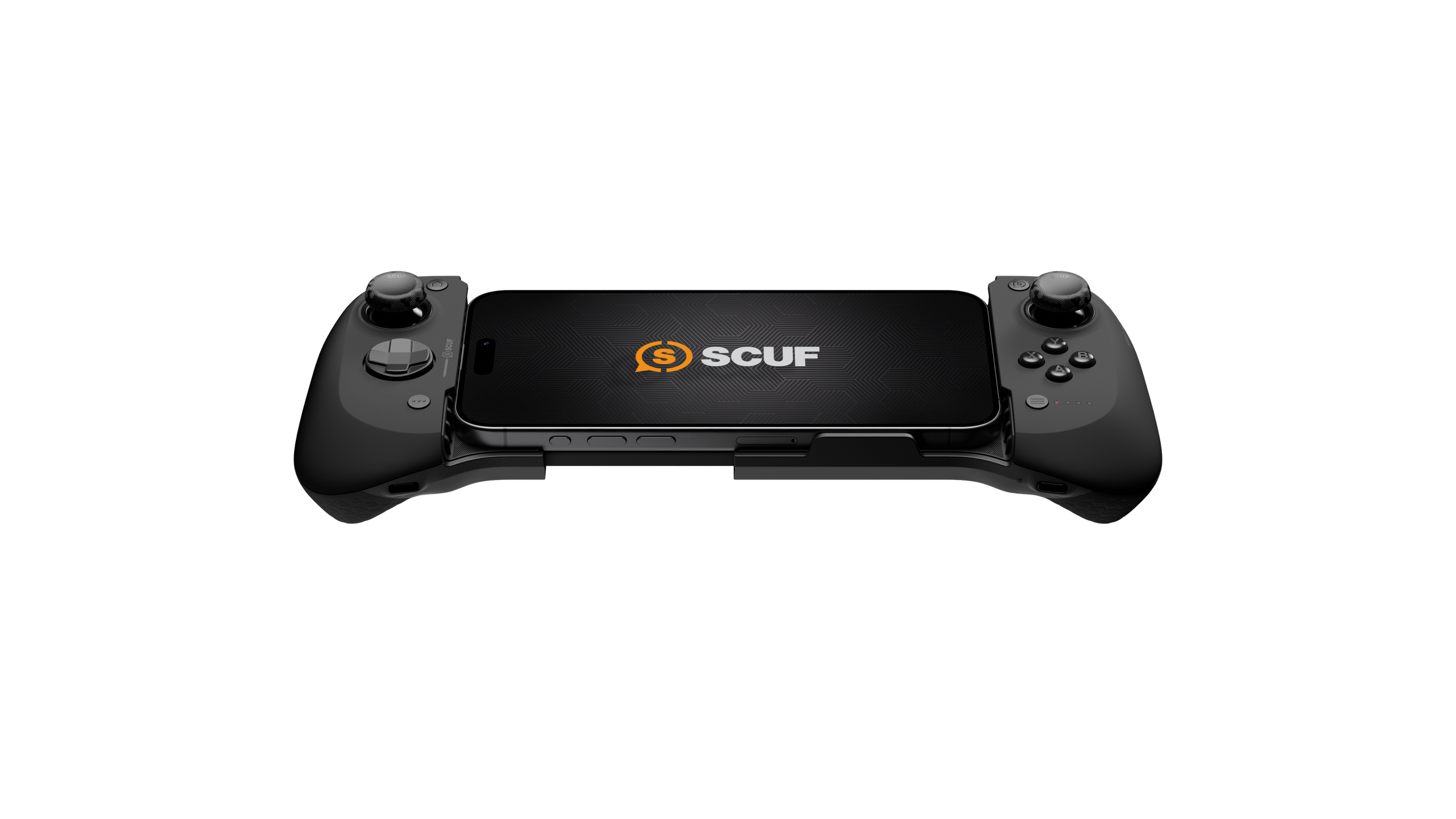
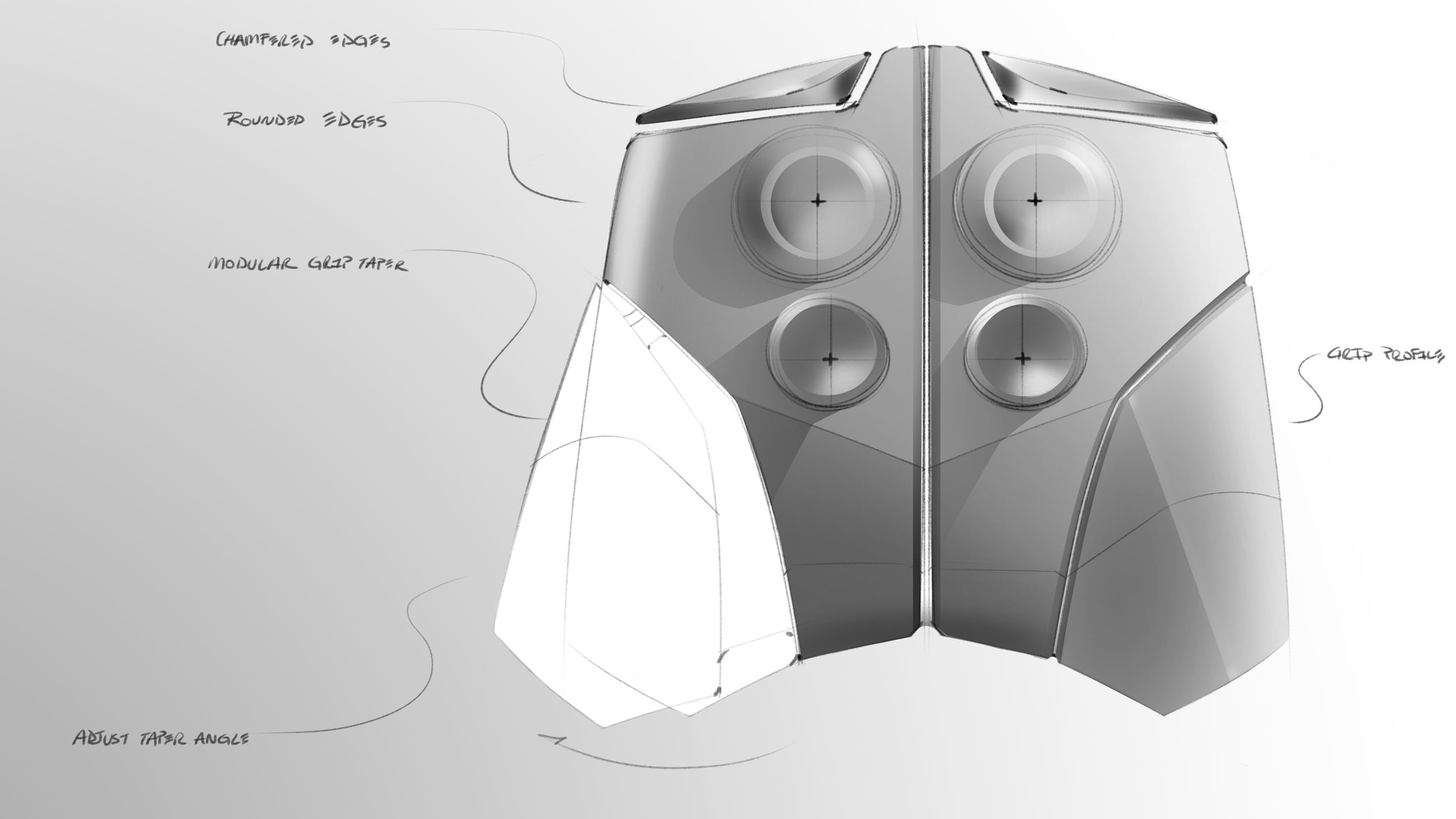
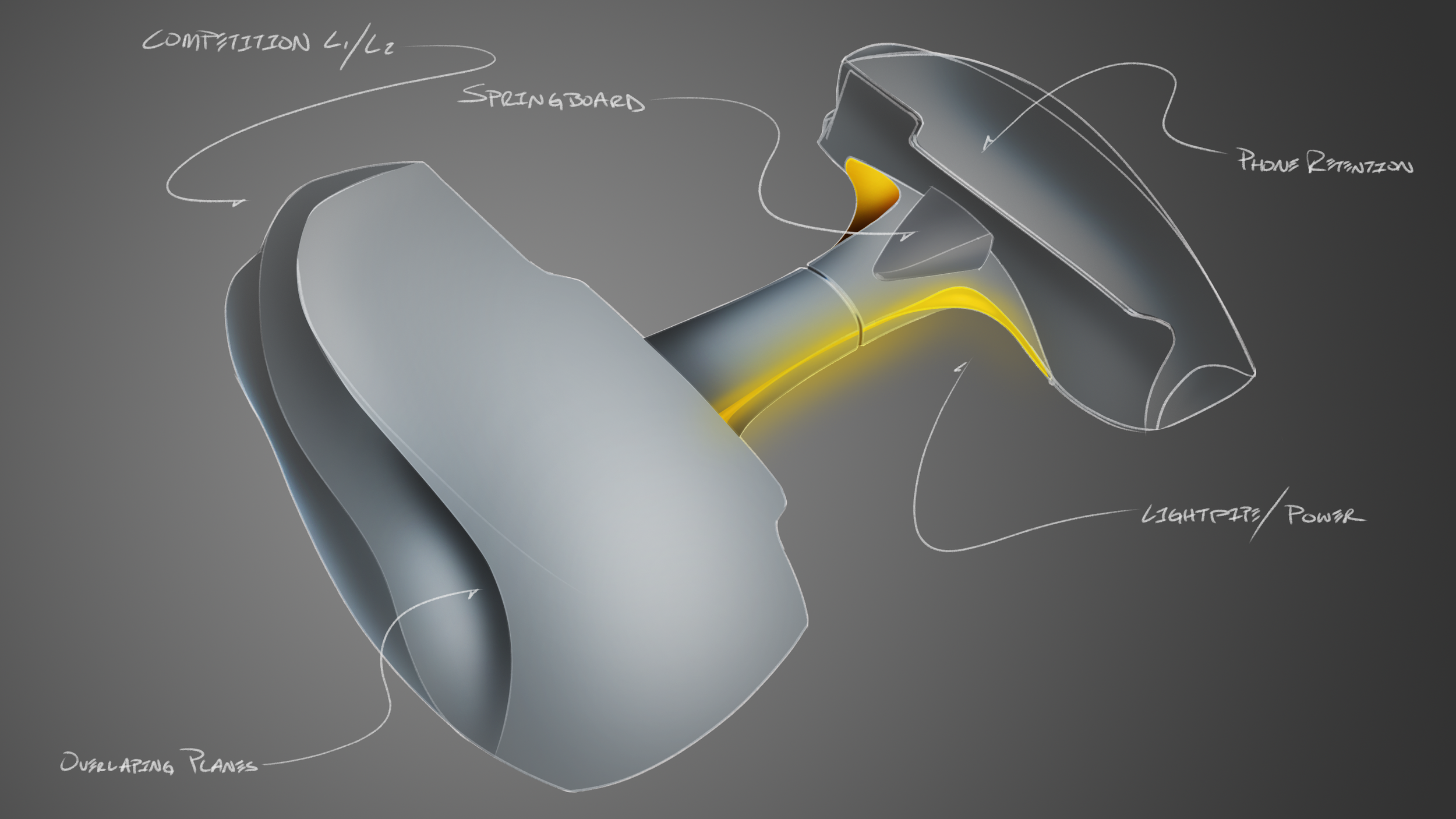
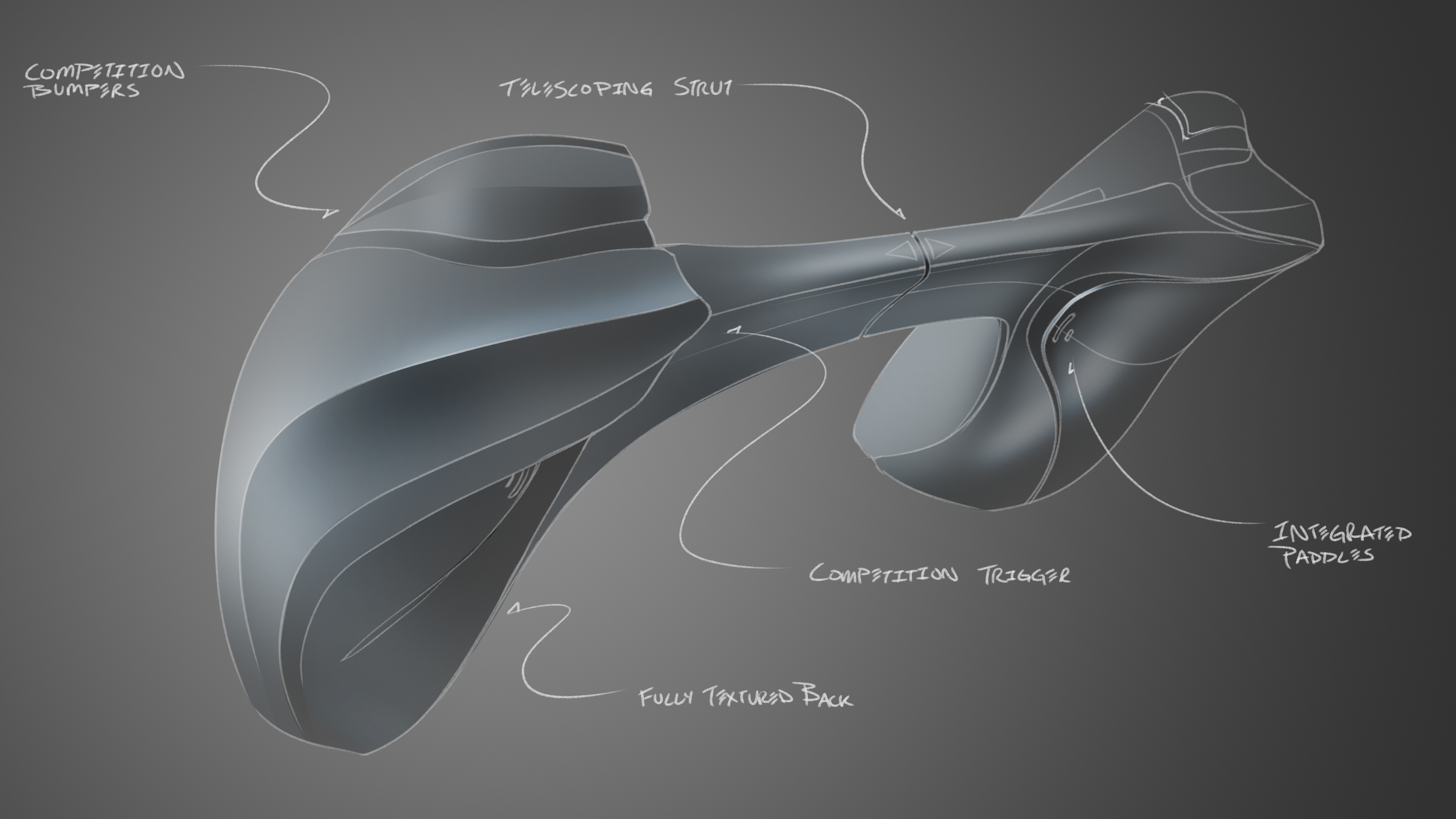
To answer this, we prioritized ultra-portability without compromising gameplay quality. By engineering full-sized inputs where possible and action buttons into a compact form factor, we aimed to achieve a pocket-sized, highly ergonomic experience that rivals the tactile familiarity of a traditional home console controller. To further differentiate the product, we integrated proprietary SCUF IP. Signature features like programmable rear paddles and performance grip overmolds were implemented not merely as add-ons, but as critical, highly requested upgrades that users felt were conspicuously absent in competing devices.
Continued Feature Development //
A Surface Design Sketch Renders //
Form Development //
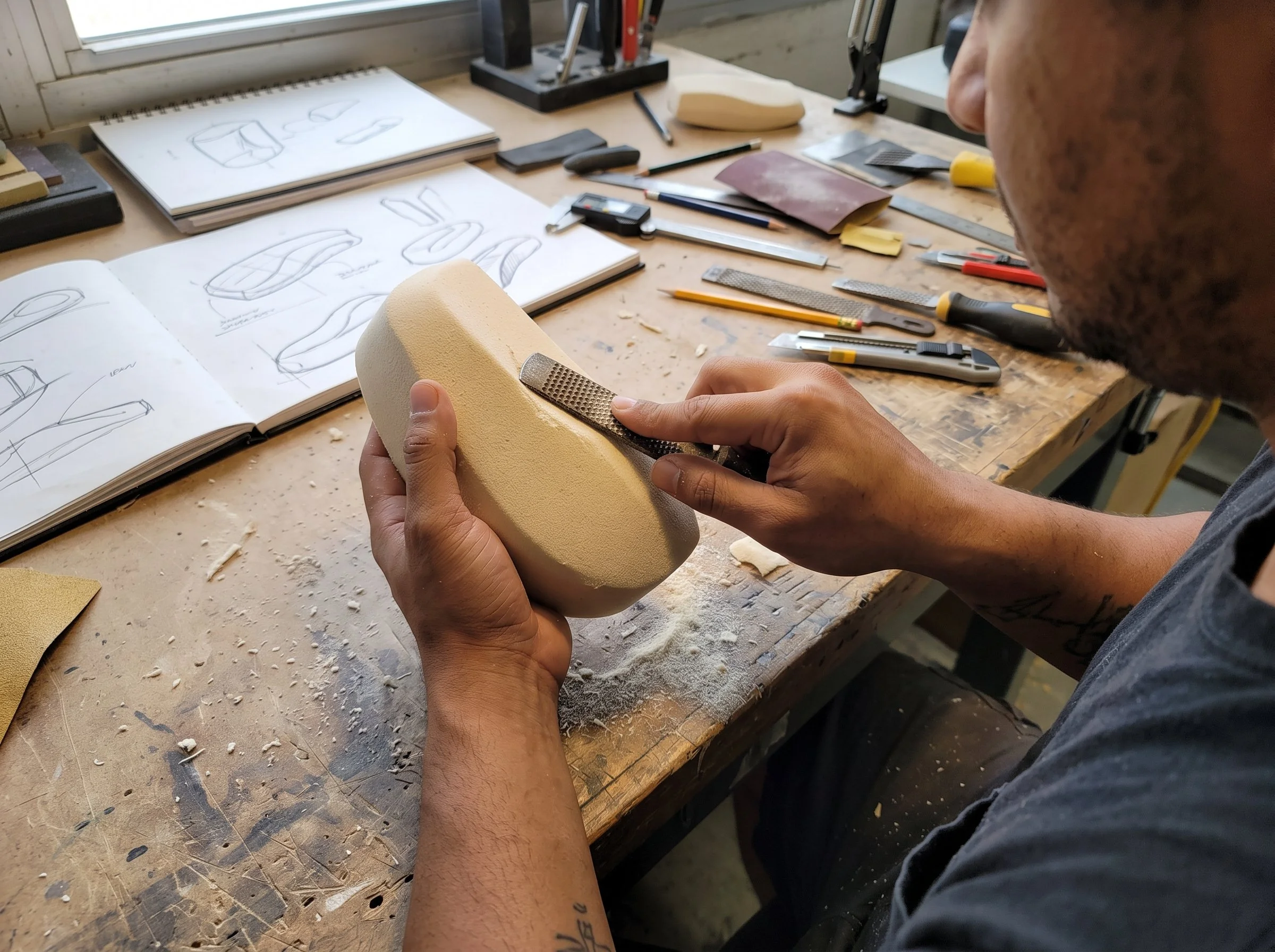
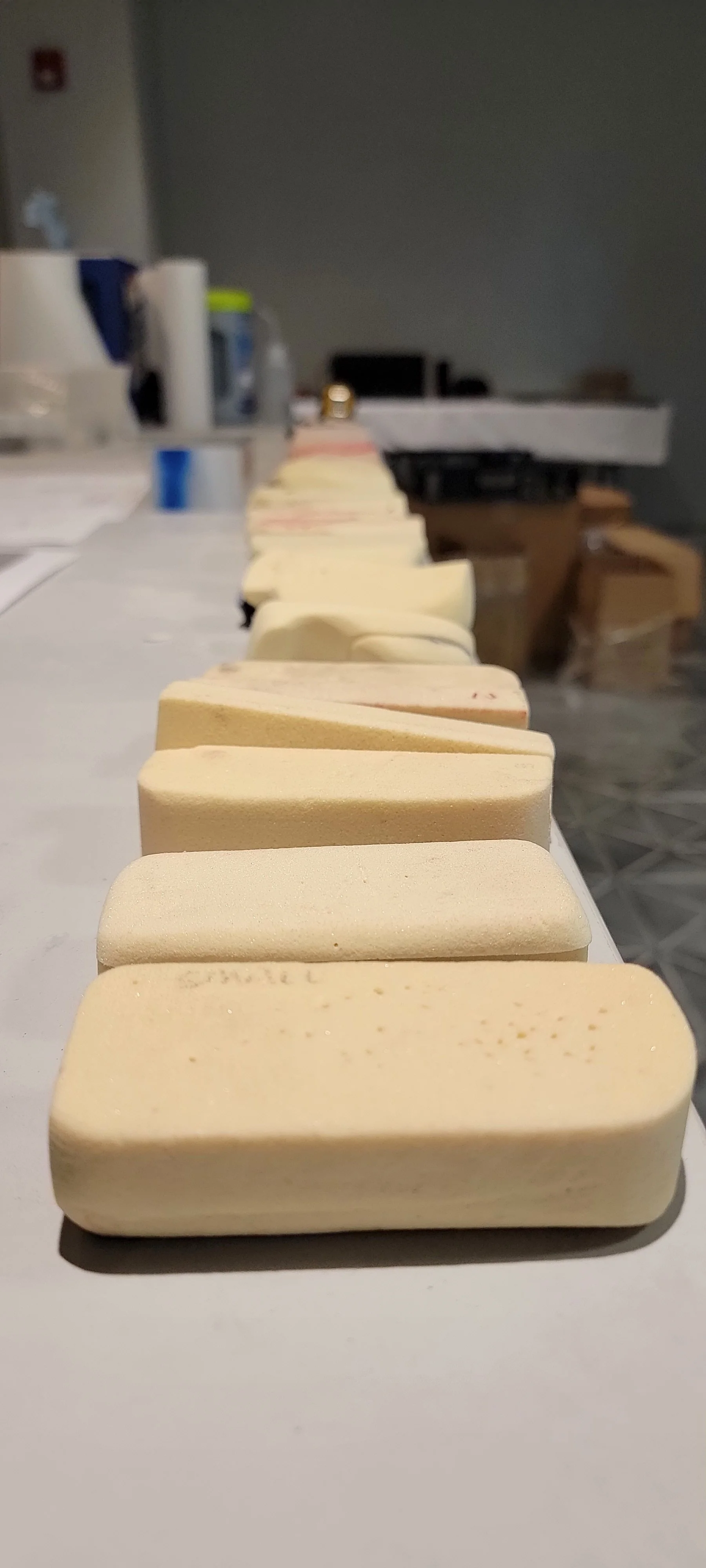
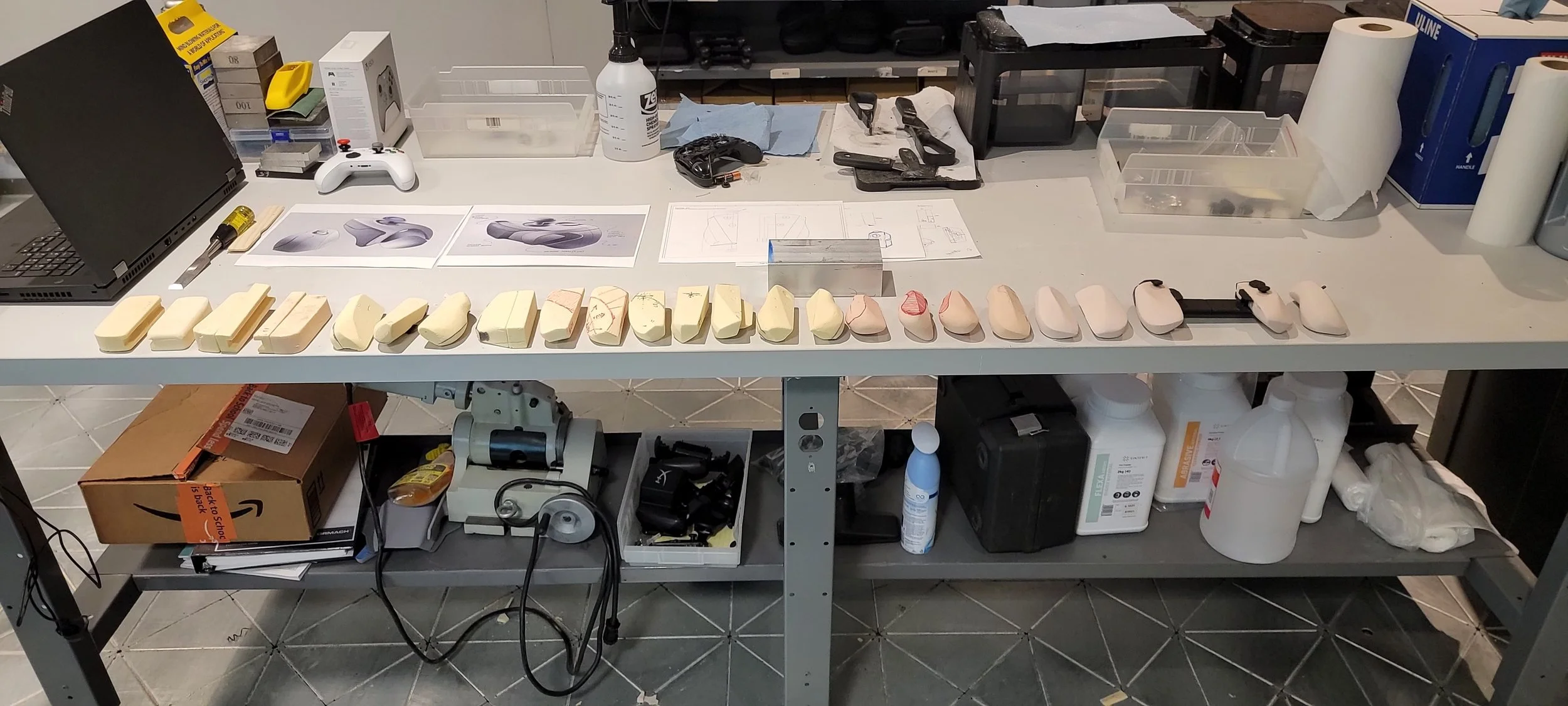
The process continued by translating early-stage concepts into foundational physical models, allowing us to visualize and evaluate the overall silhouette in real space. These models then undergo rigorous ergonomic evaluation with an alpha testing group. Based on their tactile feedback, the physical forms are iteratively refined. Once the optimal shape is locked in, the finalized models are 3D scanned to digitize the geometry, bringing the precise surfaces into CAD for further mechanical development
CNC Processed Form Refinement //
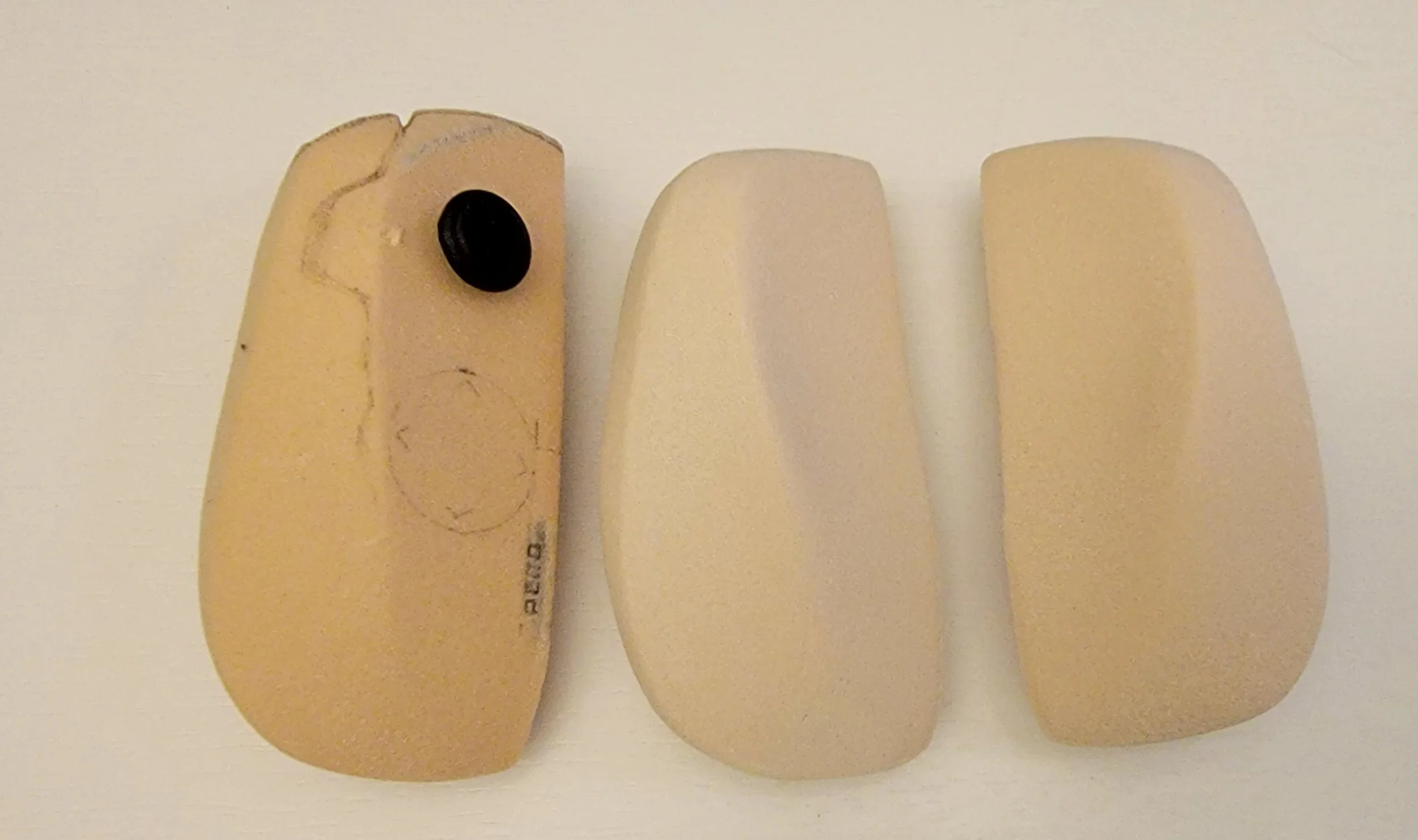
Following the 3D scanning and digital refinement of the rough geometry in CAD, physical mockups are CNC machined from open-cell foam blanks for late-stage validation.
By this phase, the core ergonomics and A-surface details are nearly locked, requiring only minor micro-adjustments.
These machined foam prototypes undergo rigorous tactile and usability testing with the alpha user group. Their final approval serves as a critical stage-gate, ensuring the physical ergonomics are fully validated before the design is authorized to advance into downstream engineering and production
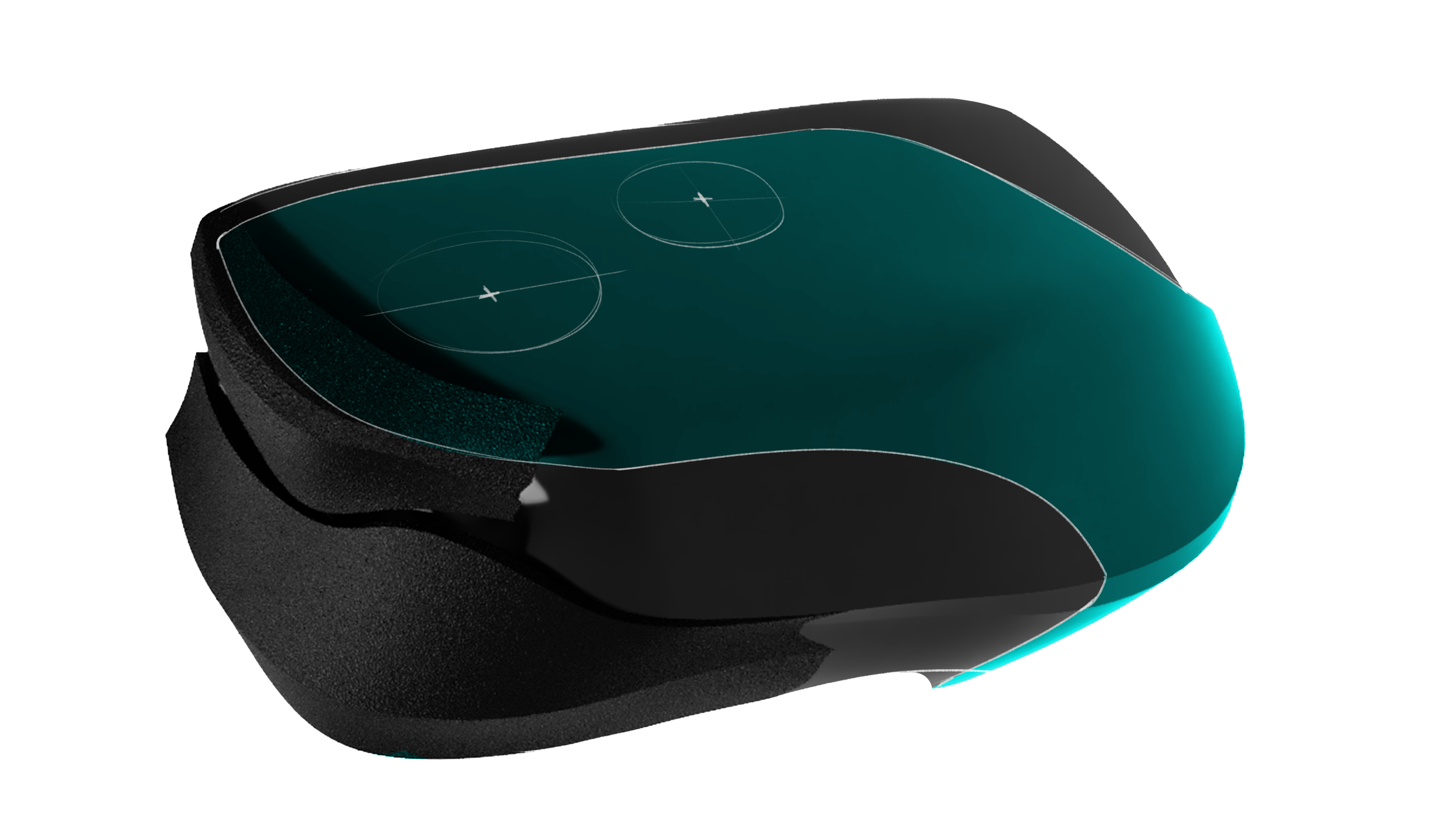
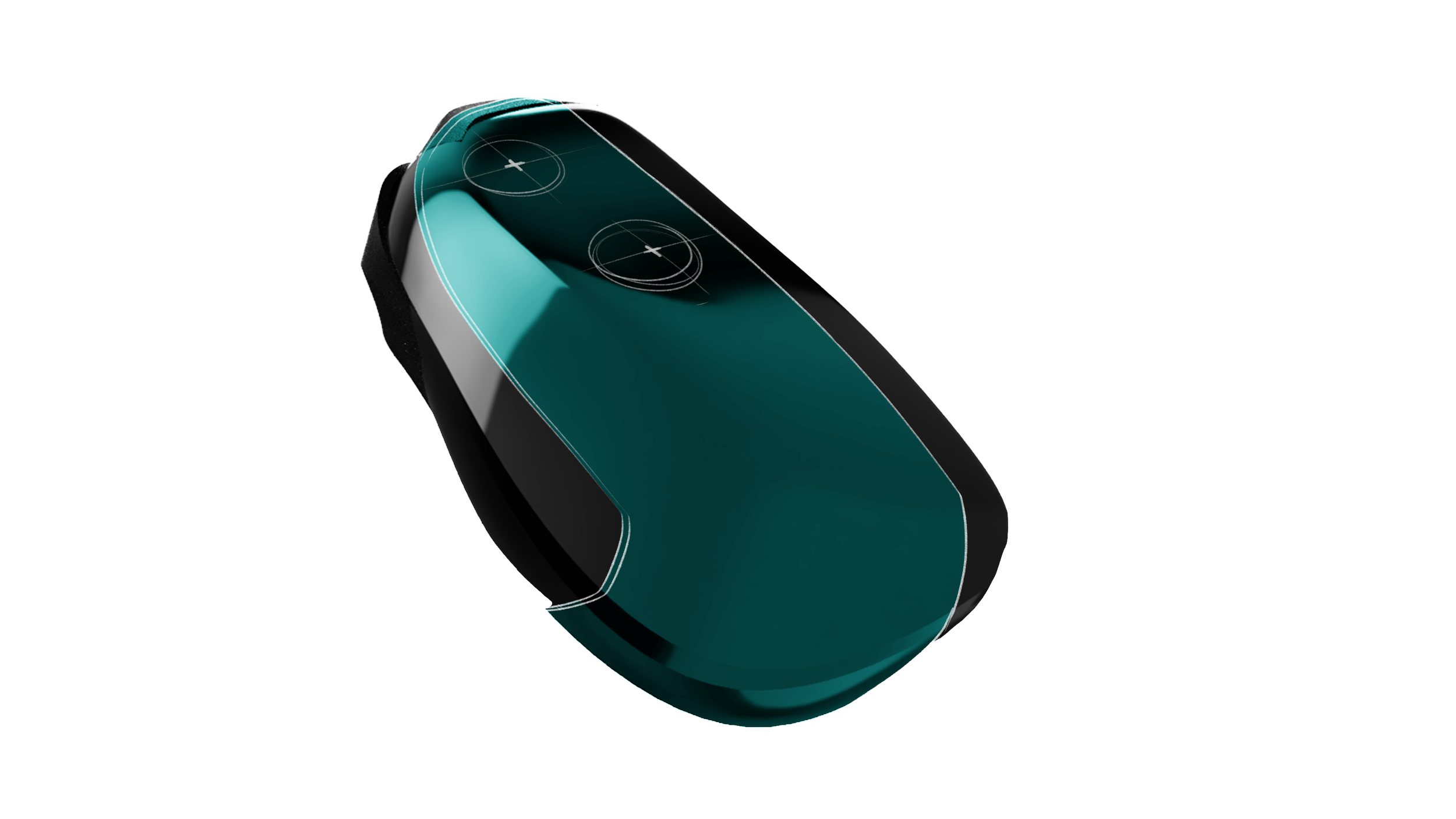
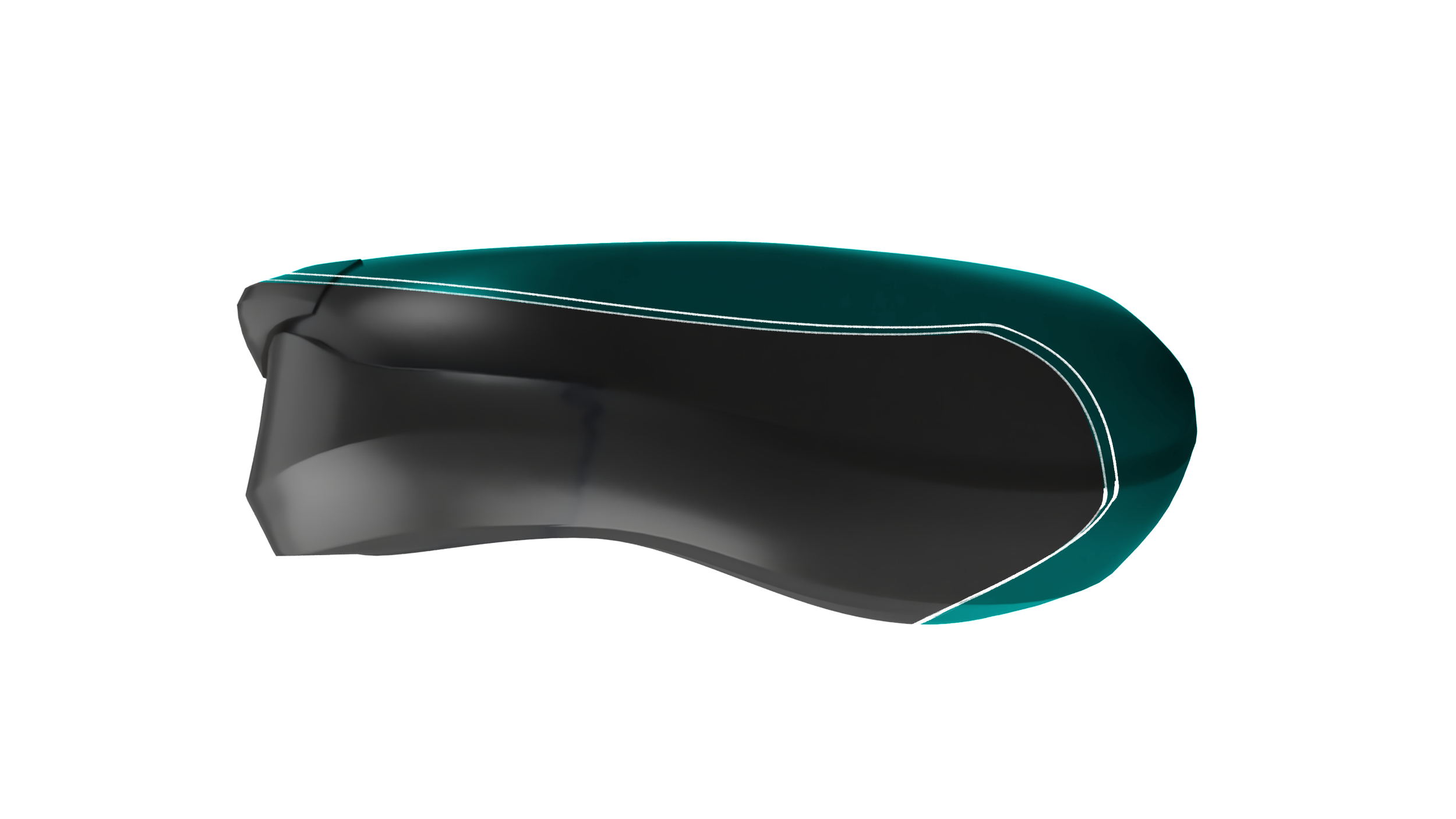
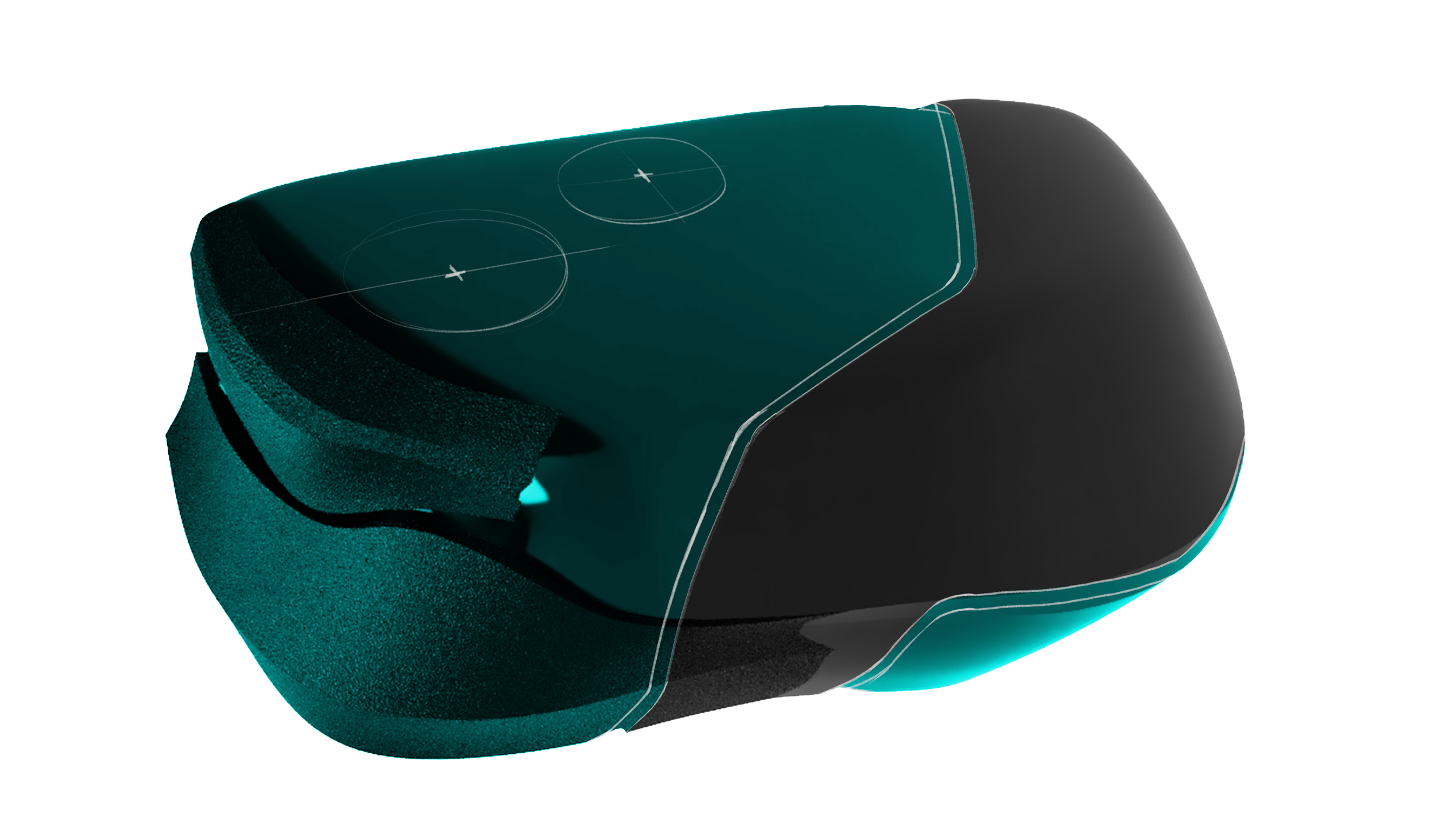
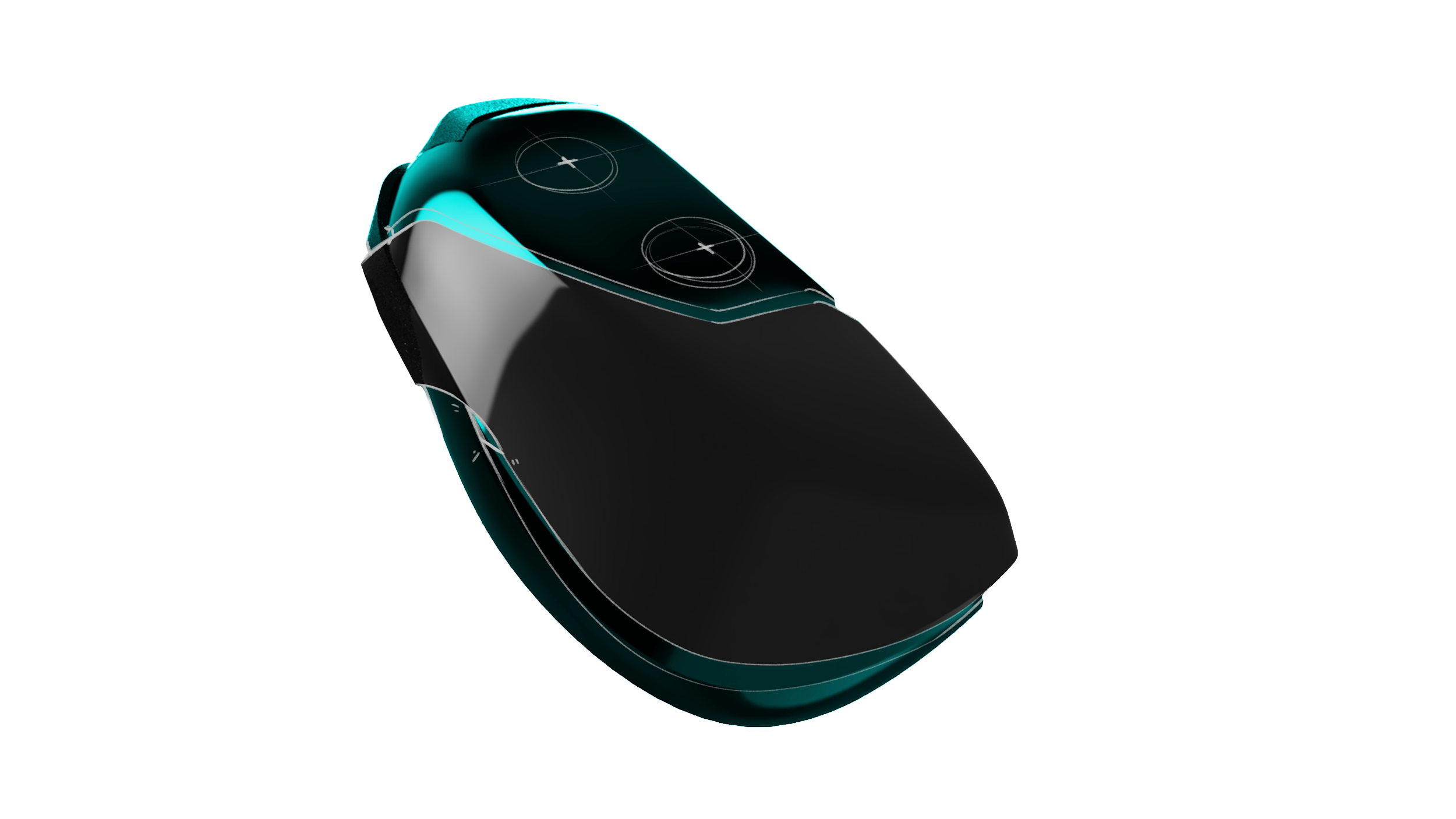
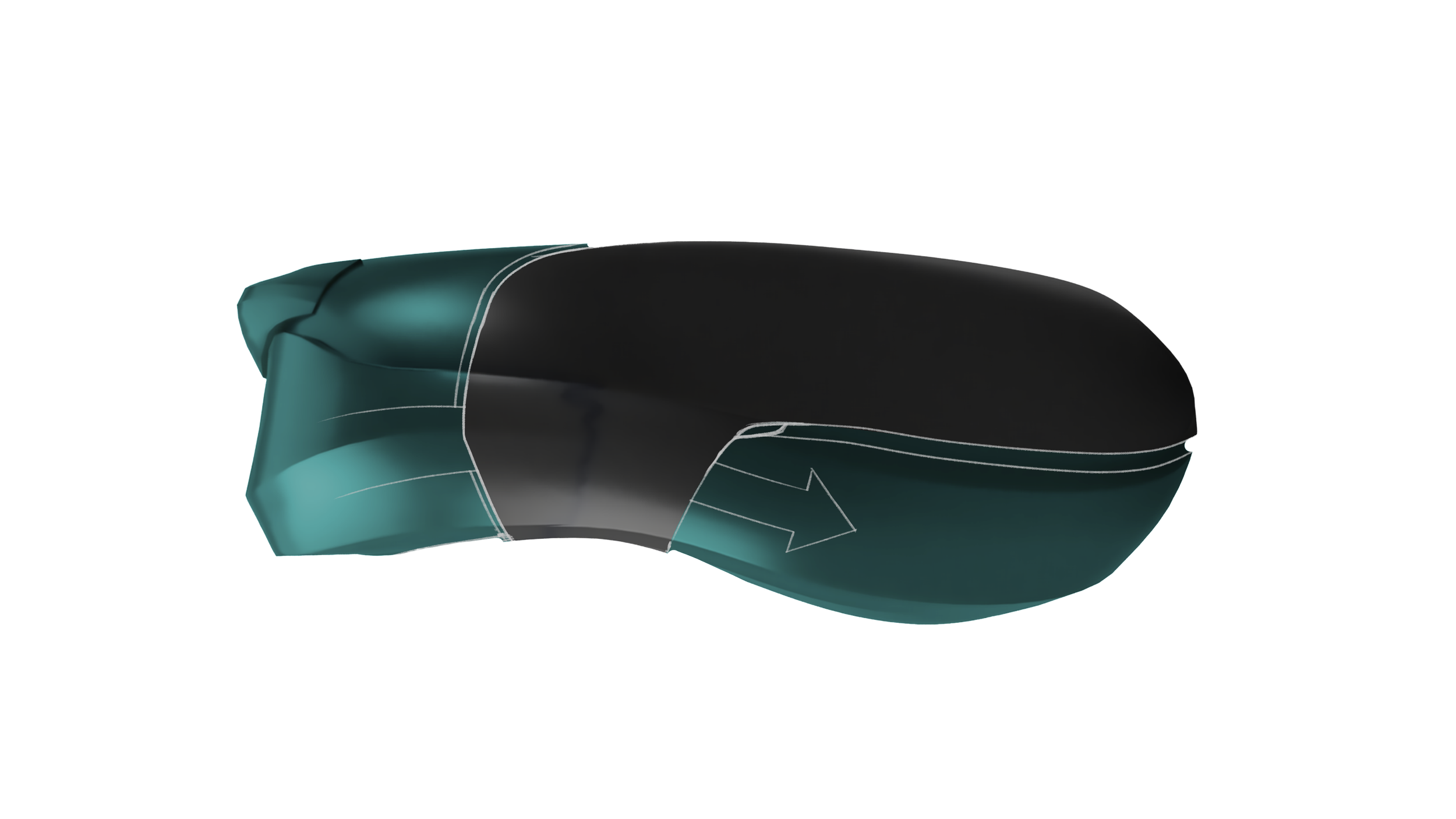
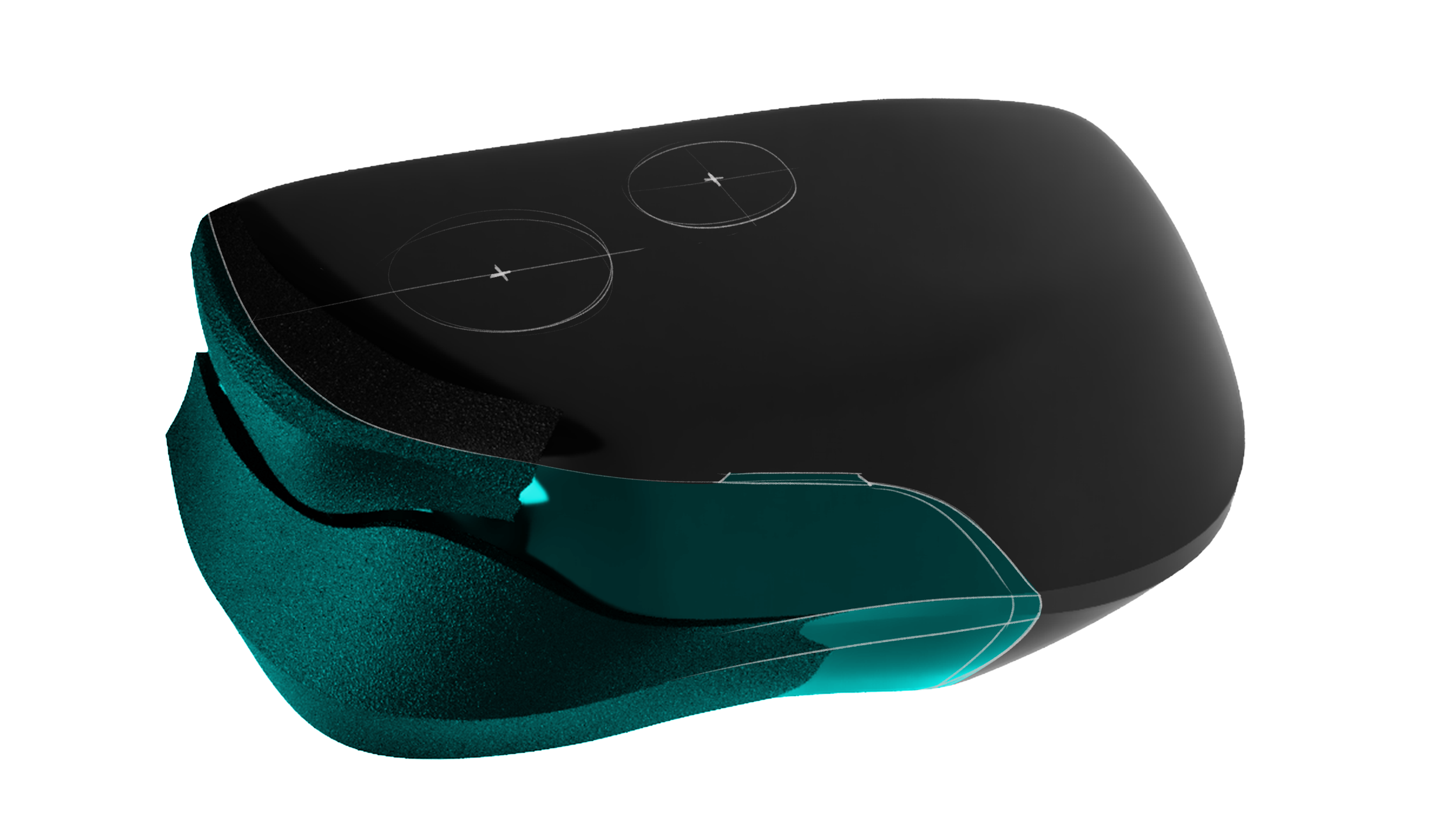
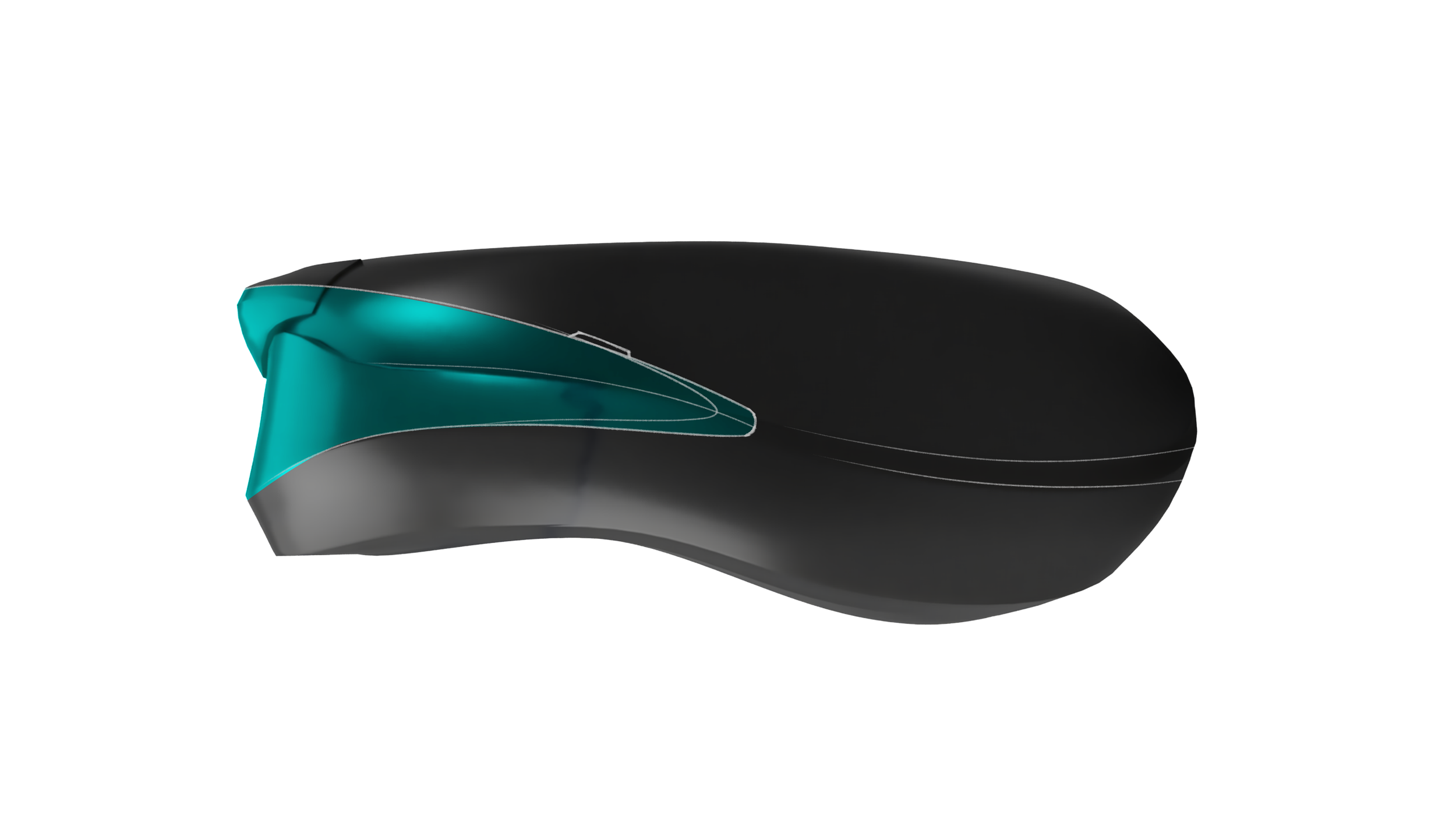
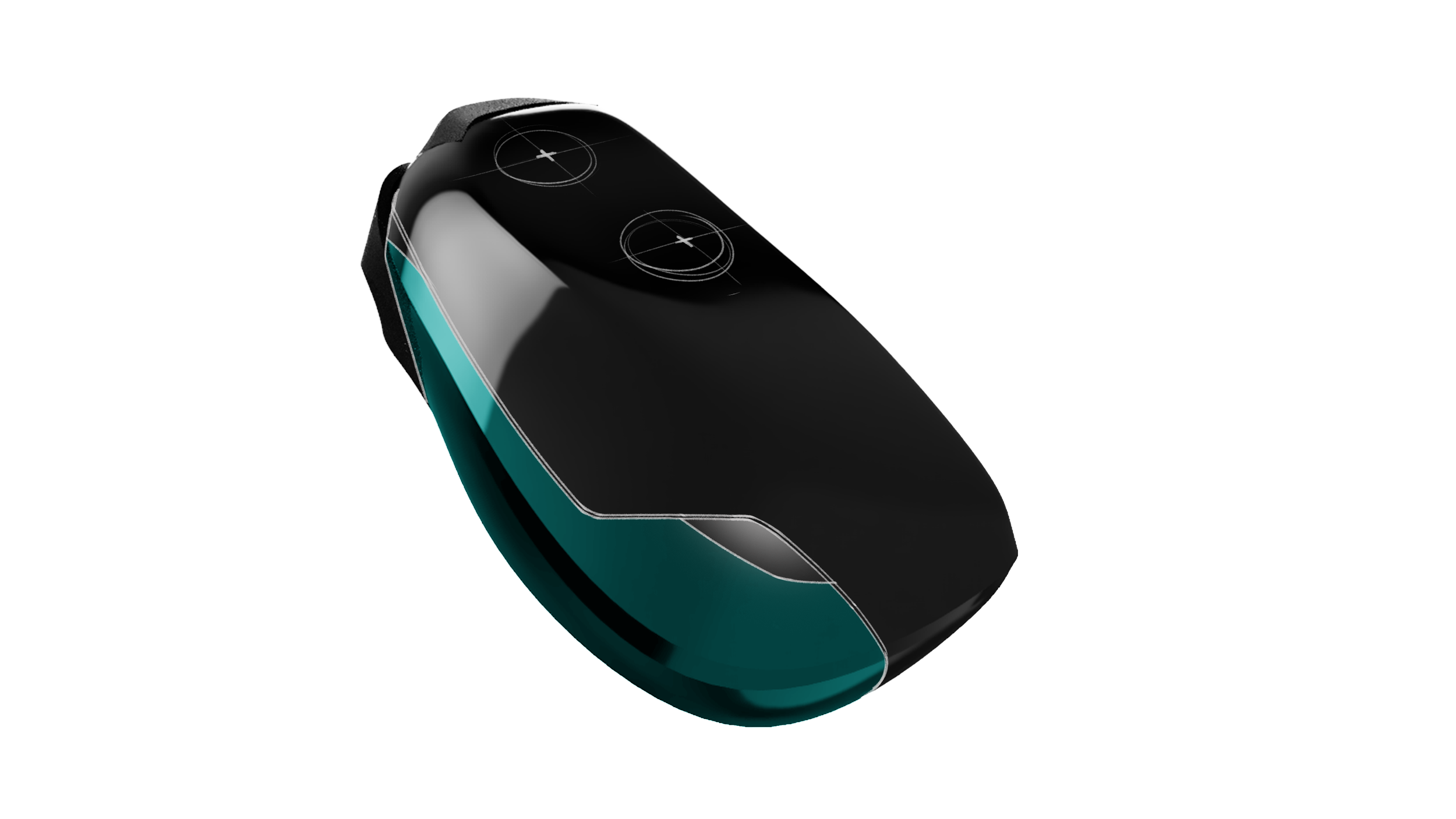
A Surface Split Line Development //
Grip Texture Development //
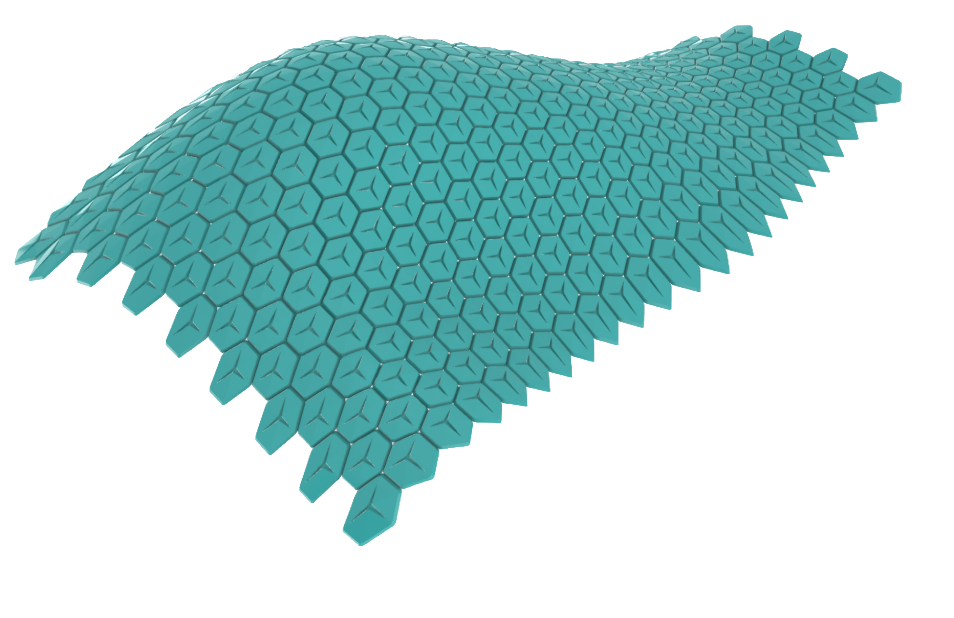
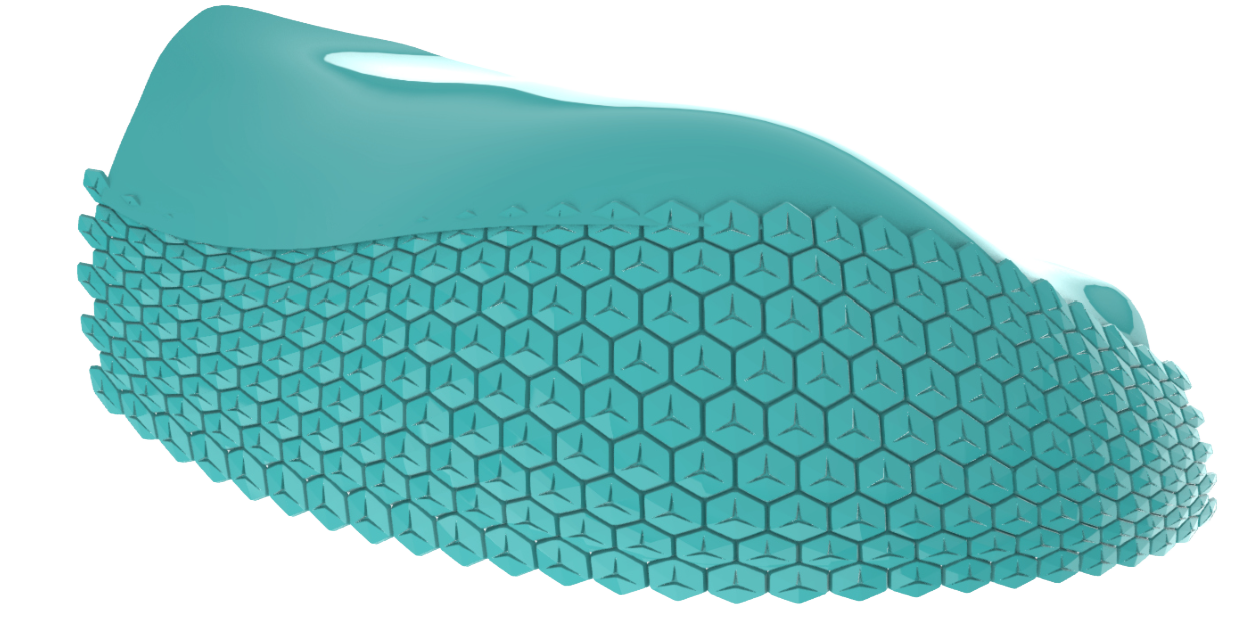
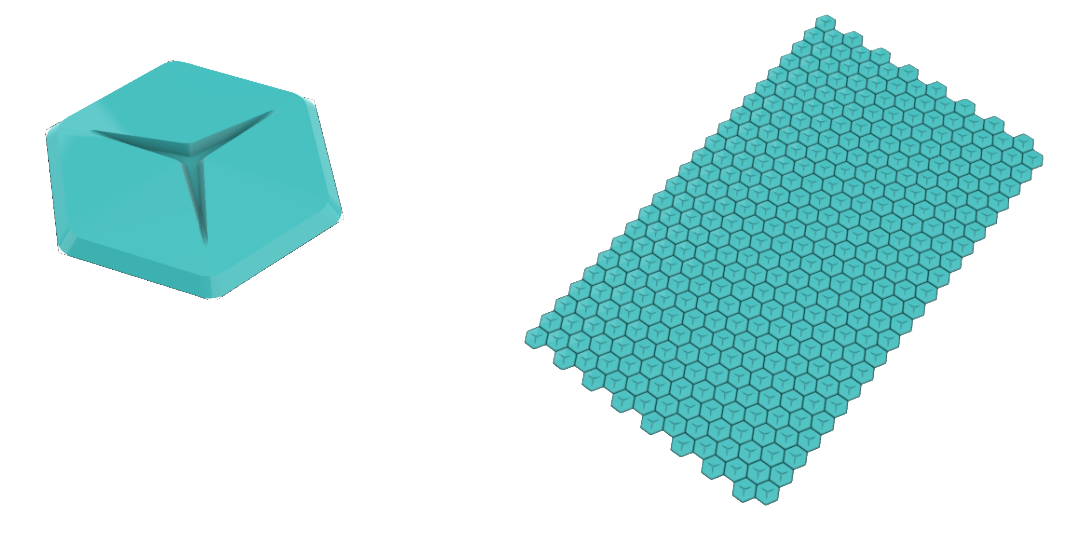
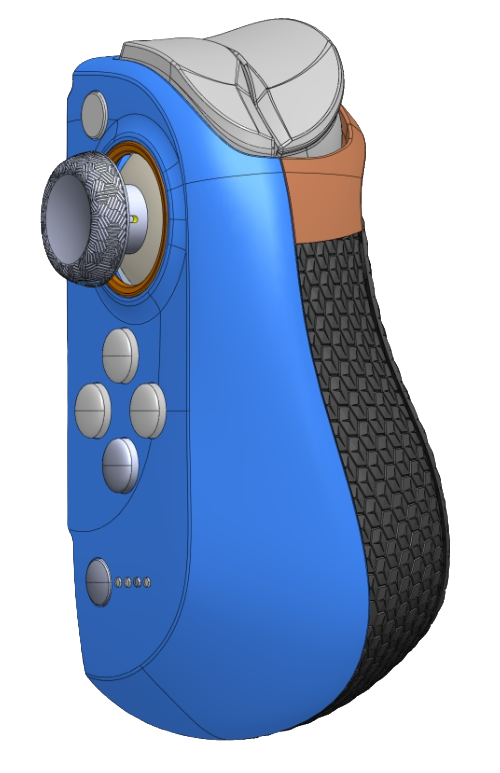
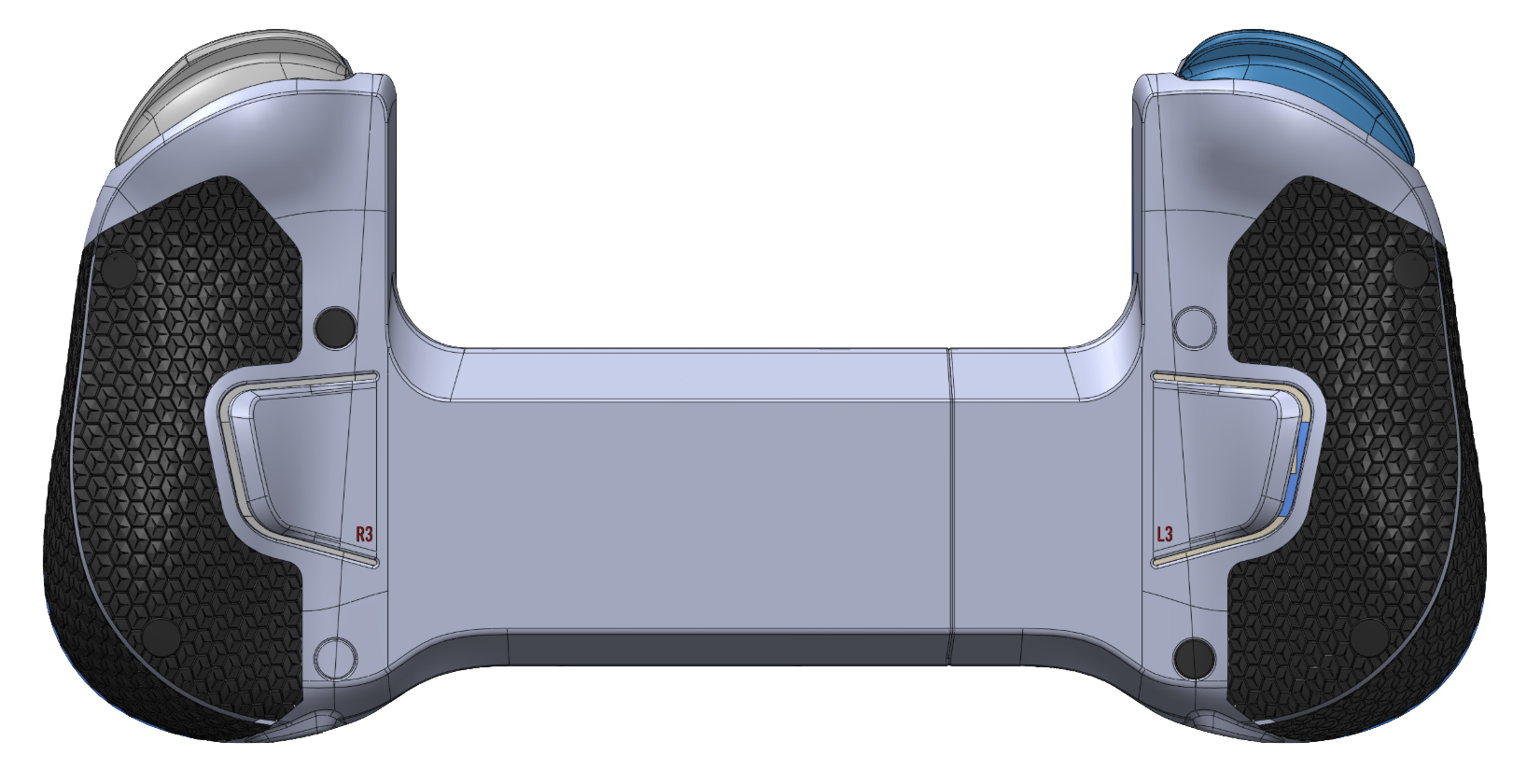
Following the finalization of the surface splits and mechanical feature integration, the focus shifted to complex A-surface refinement and texture generation. Although we evaluated multiple CAD platforms during the initial A-surface studies, Rhino paired with Grasshopper proved to be the most robust toolset for this phase. Grasshopper's computational design capabilities allowed me to seamlessly map a flowing, continuous pattern across the device's complex compound curves without distortion. By utilizing a parametric strategy, the master base node (illustrated below) was dynamically arrayed and projected onto the target regions, generating the finalized 3D grip geometry with high precision and optimal tactile response.
Final CAD Solution for Render and EVT //
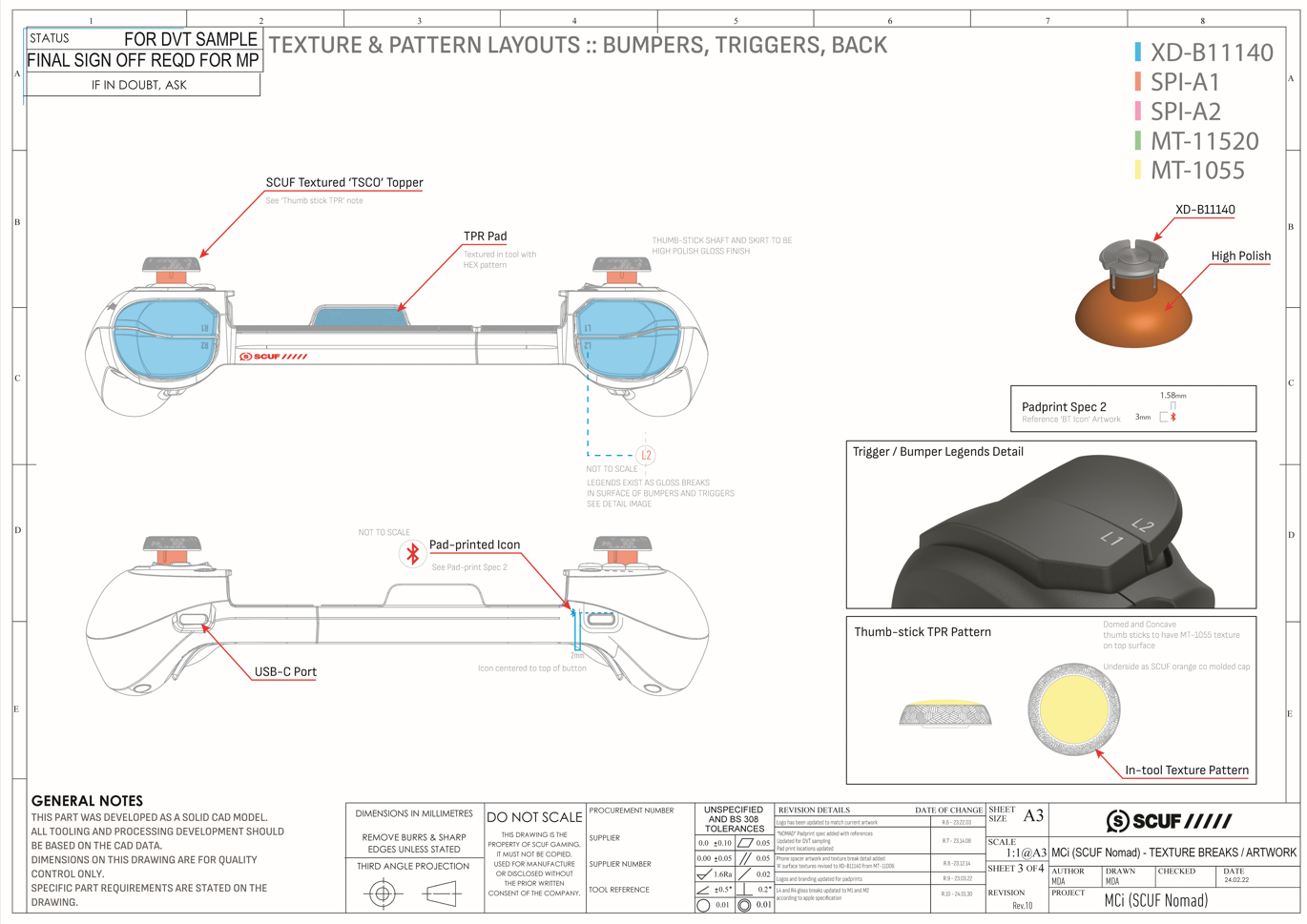
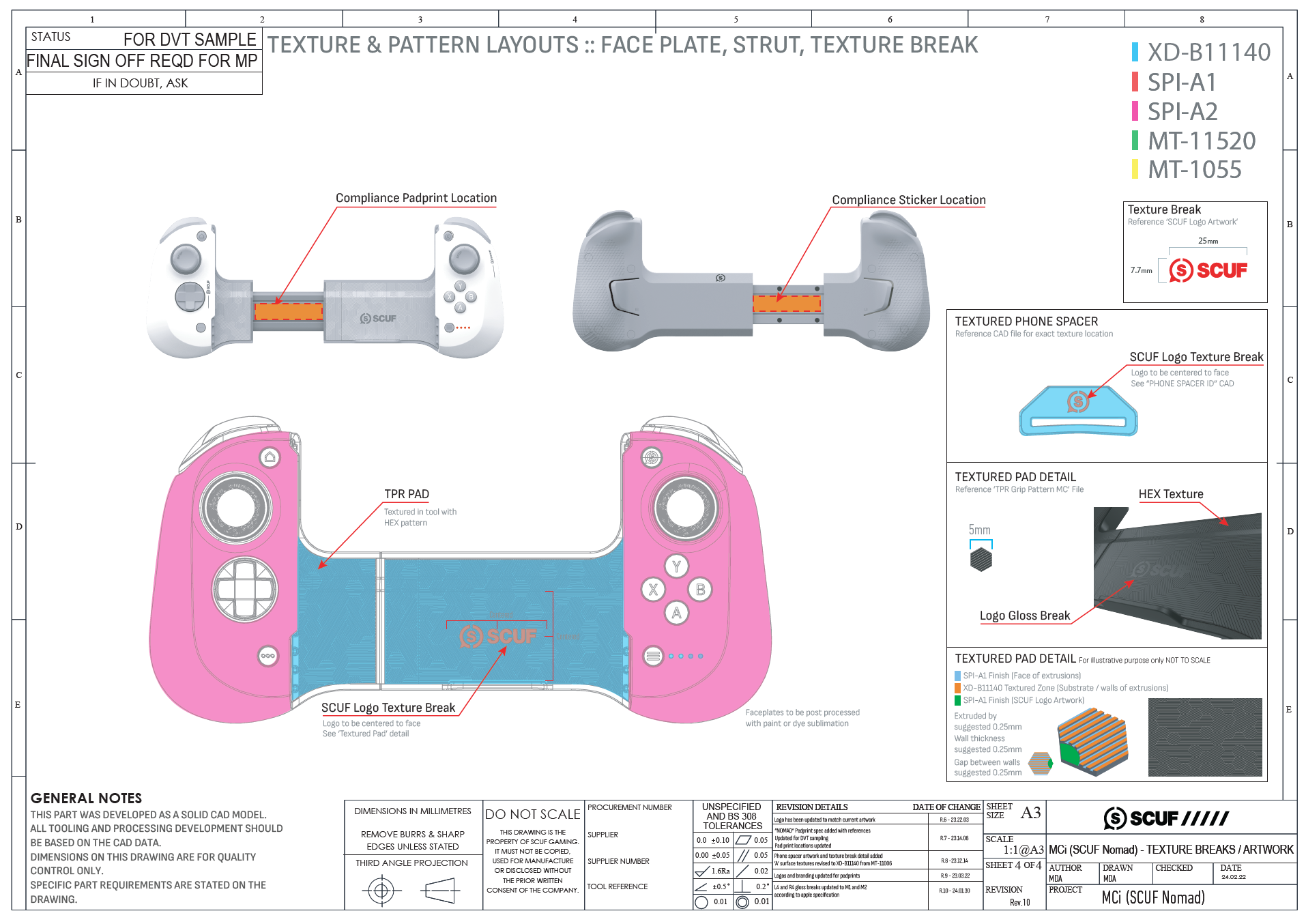
CMF Textures and Finishes Specification //


Final Product Renders //